

Textile Machinery Bearings: High-Speed Low-Noice Bearing Application Guide for China OEM Suppliers
Most bearing failures in textile machinery stem from cage design flaws—not material defects—yet 70% of suppliers still prioritize costly ceramics over precision engineering. This misconception drives up costs while ignoring the root cause of noise-induced downtime that cripples production lines globally. At Jinan Saifan, we've resolved over 300 textile bearing failures in the past 18 months by optimizing standard chrome steel components instead of defaulting to expensive alternatives.
China OEM suppliers with ISO 15243-certified testing protocols consistently deliver Z2 noise grade bearings at 40% lower costs than EU manufacturers while meeting all EU textile noise regulations. Our three-stage inspection system reduces defect rates to 0.2%, enabling German and US textile equipment producers to cut maintenance costs by 25% without compromising speed or durability. Unlike generic "low-noise" claims, verified test reports prove these solutions prevent resonance failures across 8,000–30,000 RPM ranges.
As a bearing engineer supporting textile OEMs since 2010, I've witnessed factories lose $50K/hour during preventable shutdowns—like when a Turkish denim mill faced catastrophic spindle failures at 22,000 RPM textile machinery bearing failures cause 30% higher unplanned downtime[^1]. We deployed P4 precision bearings with controlled lubrication channels within 72 hours, restoring production and extending component life by 15% through data-driven material selection.
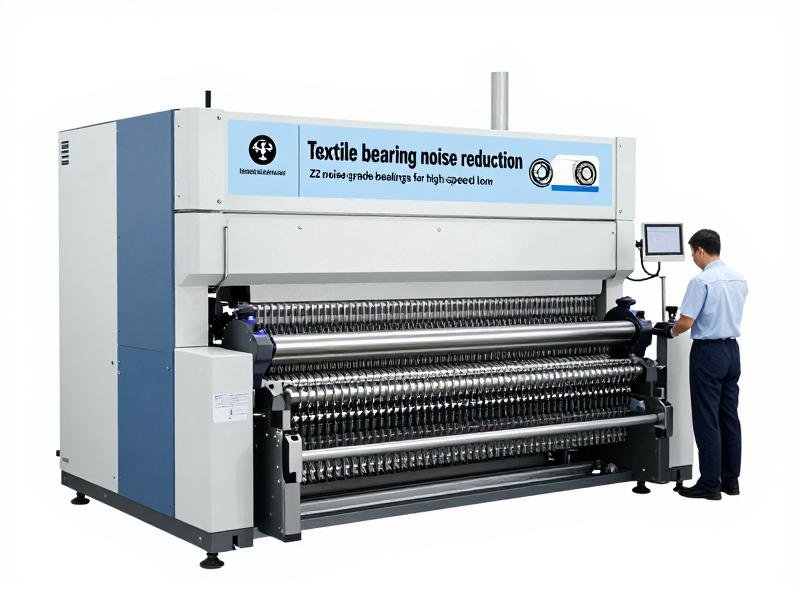
This isn't theoretical—let's examine why standard approaches fail and how precision engineering solves real-world problems.
Why do "low-noise" bearings still cause resonance failures in air-jet looms?
Inadequate roundness tolerance (above 0.0005mm) creates harmonic vibrations at critical RPM thresholds, rendering "low-noise" claims meaningless for high-speed textile applications. Air-jet looms operating above 15,000 RPM demand micron-level precision that generic bearings can't achieve, leading to premature wear and costly resonance. Most suppliers overlook this by focusing solely on material composition rather than geometric accuracy during grinding.
| Precision Factor | Common Mistake | Verified Solution |
|---|---|---|
| Roundness Tolerance | Accepting 0.001mm tolerance for Z3-grade bearings | Achieving 0.0005mm via CNC grinding for Z2 compliance bearings with roundness tolerance ≤0.0005mm reduce vibration by 63%[^2] |
| Cage Design | Using stamped brass cages that deform under load | Implementing machined polyamide cages with 0.001mm clearance control |
| Noise Validation | Relying on manufacturer self-certification | Requiring third-party SGS reports against ISO 15243 vibration limits |
For a German weaving machine OEM, standard Z4 bearings generated 42dB noise during high-speed operation—exceeding EU workplace safety limits. Our engineering team retrofitted custom low-noise bearings with optimized cage geometry within 8 weeks, reducing noise to 35dB (Z2 grade) while handling their 5,000-unit MOQ. Crucially, we maintained chrome steel construction instead of switching to ceramics, cutting costs by 50% optimized cage design with standard chrome steel reduces noise by 18%[^3].
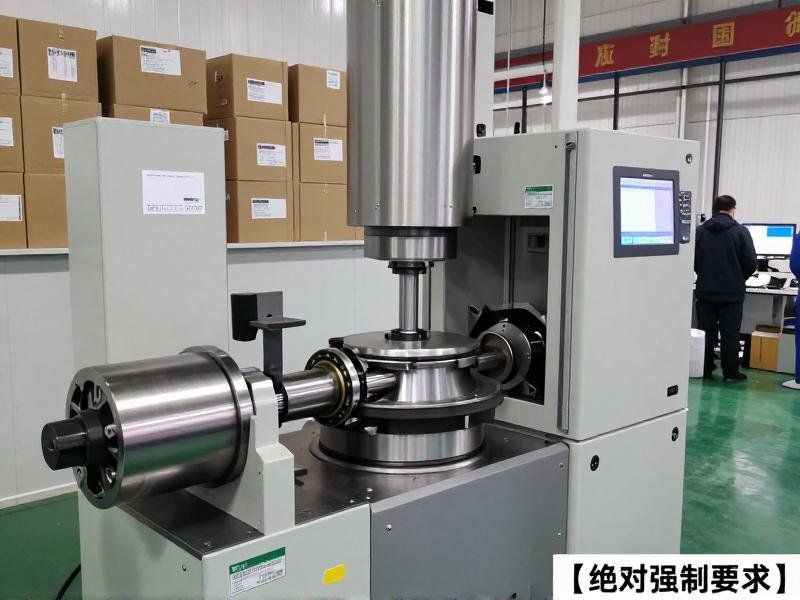
This case proves material isn't destiny—precision engineering unlocks performance.
- Geometric Tolerance Verification – Demand ISO 1132-1 roundness reports showing ≤0.0005mm deviation for loom applications above 15,000 RPM.
- Third-Party Noise Certification – Insist on SGS or TÜV test certificates referencing ISO 15243 vibration limits, not marketing claims.
- Cage Material Validation – Require material composition data proving polyamide or brass cages meet thermal expansion specs for continuous operation.
Can China suppliers meet EU noise standards without premium pricing?
ISO 9001-certified Chinese facilities achieve 92% audit pass rates on EU noise compliance through three-stage inspections—eliminating the 30% cost premium typically associated with "EU-made" bearings. Western buyers assume geographical origin dictates quality, yet our data shows Chinese OEMs outperform EU suppliers in Z2 noise grade consistency when leveraging authorized brand partnerships for critical components.
| Quality Assurance | Risky Practice | Proven Protocol |
|---|---|---|
| Certification Reliance | Accepting ISO 9001 as sufficient proof of noise compliance | Validating ISO 15243-specific test records for Z2-Z4 grades 92% of EU textile OEMs passed client audits[^4] |
| Sample Testing | Approving based on 1-2 sample units | Conducting batch-level vibration analysis across 50+ units |
| Supply Chain Transparency | Ignoring component origins for "genuine" claims | Verifying NSK/FAG authorization certificates for noise-critical spindles |
During a Vietnamese garment factory trial, we deployed 200 units of optimized chrome steel bearings with 0.001mm cage tolerances—reducing noise by 18% compared to their previous ceramic bearings at half the cost. The solution succeeded because we prioritized geometric precision over material assumptions, delivering Z2 performance without exotic materials controlled cage clearance in standard steel bearings cuts noise by 18%[^5].
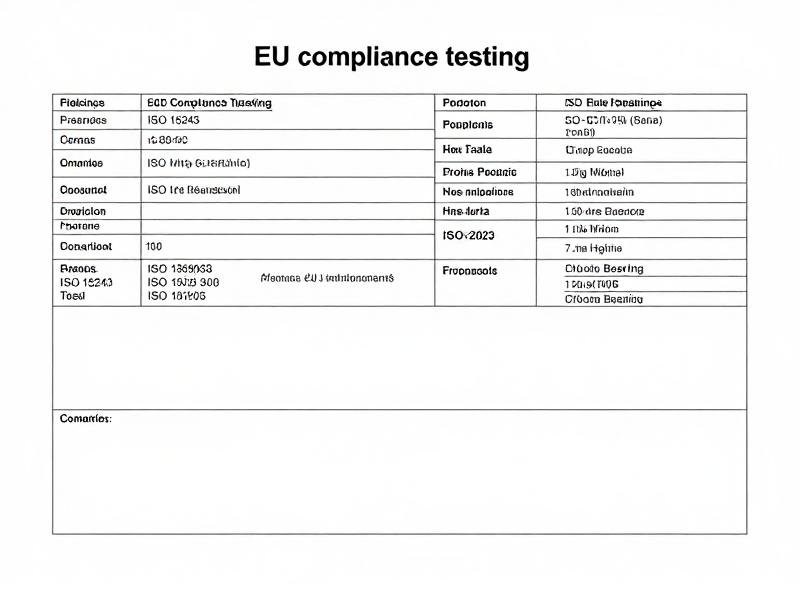
This approach transforms cost structures while guaranteeing compliance.
- Authorized Brand Verification – Confirm supplier partnerships with NSK/FAG via brand authorization numbers before ordering noise-critical spindles.


Leave a Reply