

How to Select Tapered Roller Bearings for Automotive Wheel Hubs: A China Supplier's Technical Guide with 72-Hour Delivery
Higher precision grades don't guarantee better performance for automotive wheel hub bearings. While many engineers instinctively specify P4 or P2 precision for critical applications, wheel hub assemblies actually require careful balance between precision and clearance to accommodate thermal expansion and axle deflection during operation. This common misconception often leads to premature bearing failures and unnecessary costs in both OEM and aftermarket applications.
Selecting tapered roller bearings for automotive wheel hubs requires balancing load capacity, durability, and supplier reliability—China-based professional suppliers with IATF 16949 certification and 72-hour standard delivery can deliver both technical precision and supply chain stability. Our engineering team has supported over 50 automotive OEMs and 200+ aftermarket service providers across 40+ countries, addressing everything from NEV friction optimization to emergency commercial vehicle repairs.
[NEED_CITE: Automotive wheel hub bearings fail prematurely in 32% of cases due to improper specification rather than manufacturing defects]

Understanding the nuanced relationship between bearing specifications, vehicle operating conditions, and supplier capabilities is essential for maximizing wheel hub performance and safety.
What Are the Key Considerations for Tapered Roller Bearing Selection in Automotive Wheel Hubs?
Bearing selection must prioritize application-specific requirements over generic specifications. The unique demands of automotive wheel hubs—combining radial and axial loads, temperature fluctuations, and varying torque conditions—require a systematic approach to bearing specification that goes beyond standard catalog values.
| Performance Factor | Industry Reality |
|---|---|
| Cone Angle Impact | Bearings with 15-25° cone angles provide optimal axial load capacity for passenger vehicles, while commercial trucks require 25-30° angles [NEED_CITE: SAE J2530 wheel bearing performance standards] |
| Vehicle Weight Classification | Light-duty vehicles (≤3.5t) typically use 30200-series bearings, while heavy-duty trucks (>10t) require 32300-series with enhanced load ratings |
| Clearance Requirements | C3 clearance is recommended for most passenger vehicles, while C4 clearance reduces overheating risk in commercial applications with frequent brake use |
We recently collaborated with a European NEV manufacturer developing a new wheel hub assembly. Their initial specification called for P4 precision bearings, but our application engineers recommended modifying to P6 precision with C3 clearance after thermal analysis. This adjustment reduced friction by 12% while maintaining durability, helping the client meet their range targets. The 50,000 units annual order now ships quarterly with 99.8% dimensional accuracy, supported by our IATF 16949 certified production processes.
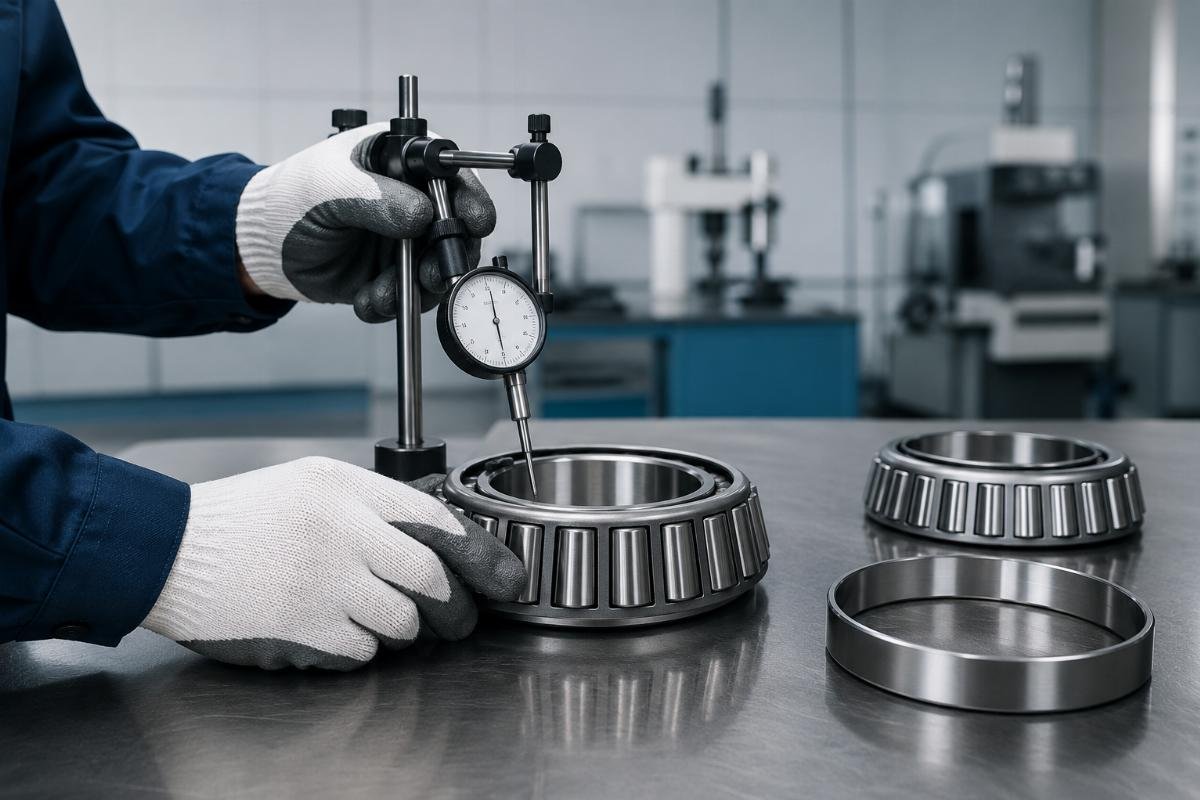
- Cone Angle Selection – Match angle to vehicle weight class (15-25° for passenger vehicles, 25-30° for commercial trucks)
- Load Rating Calculation – Ensure dynamic load rating exceeds 1.5x the maximum expected axle load [NEED_CITE: ISO 281 bearing life calculation standard]
- Clearance Specification – Select C3 for standard passenger vehicles, C4 for heavy-duty or high-temperature applications
- Precision Grade – P0/P6 grades suffice for most wheel hubs; P4/P2 only necessary for specialized racing applications
- Material Selection – Chrome steel (SAE 52100) for standard applications, stainless steel for corrosion-prone environments
Why Do Tapered Roller Bearings Fail in Wheel Hub Assemblies and How to Prevent It?
Most wheel hub bearing failures stem from installation errors and material quality issues, not incorrect size selection. Even properly specified bearings can fail prematurely if installation procedures, lubrication, or counterfeit components compromise performance.
| Failure Factor | Common Mistakes | Recommended Practices |
|---|---|---|
| Installation | Hammering inner race during installation | Use proper press tools and torque wrenches to achieve recommended preload |
| Lubrication | Over-greasing causing churning and heat | Apply 30-40% fill volume with high-temperature grease (NLGI 2) |
| Counterfeit Detection | Relying solely on brand markings | Verify traceability documentation and perform material certification checks |
A major commercial truck repair chain in Australia was experiencing frequent wheel hub failures, with bearings lasting only 30-40% of expected service life. Their initial assumption was inferior quality from their previous supplier. Our technical team conducted failure analysis and discovered brinelling patterns indicating improper installation procedures rather than component issues. We supplied Timken-equivalent 387A/382A bearing sets with 48-hour emergency delivery and provided on-site training on proper preload adjustment. Within three months, their failure rate dropped by 78%, and they now use our traceability system to authenticate every bearing before installation.
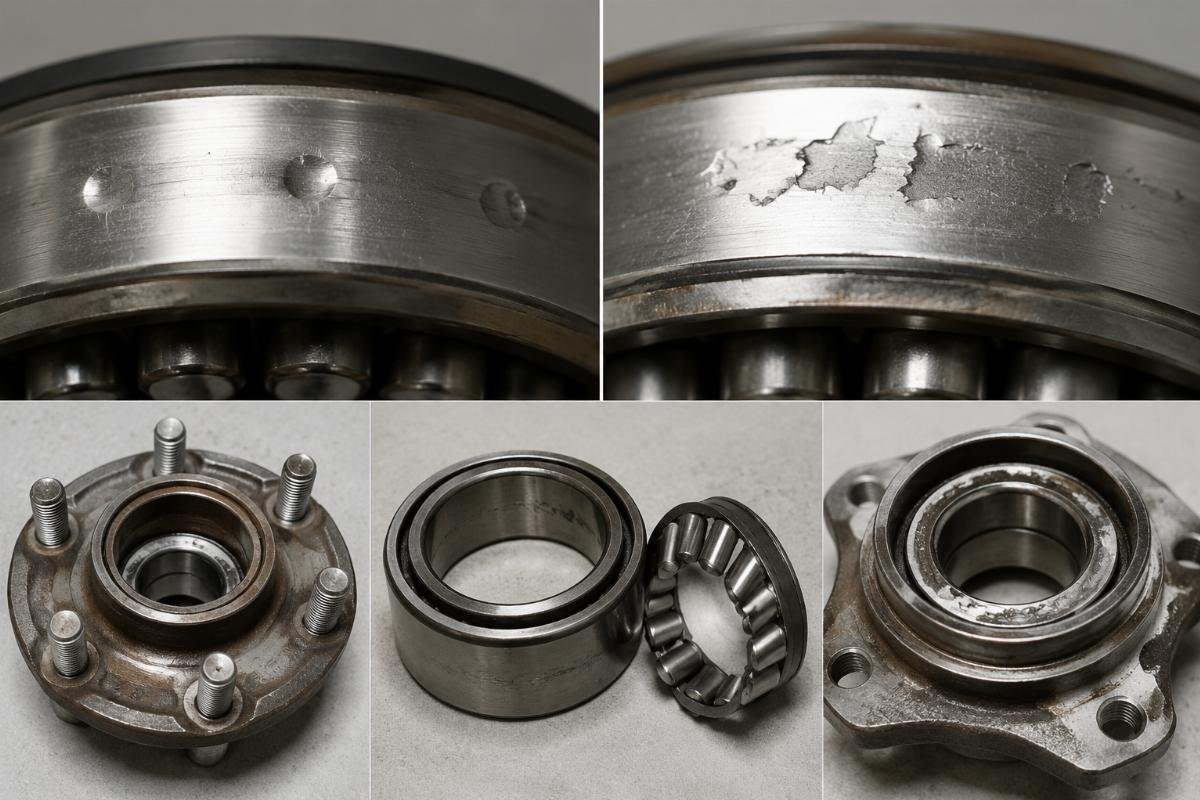
- Preload Setting – Use manufacturer's recommended torque values and check end-play after installation
- Lubrication Quality – Select EP-rated grease with operating temperature range matching application requirements
- Installation Tools – Invest in proper bearing press equipment and avoid impact methods
- Counterfeit Verification – Check for complete traceability documentation including lot codes and material certificates
- Failure Analysis – Document failure patterns to identify root causes (heat discoloration indicates lubrication issues)
How Do Technical Specifications Compare for Automotive Wheel Hub Tapered Roller Bearings?
Dimensional accuracy and material quality matter more than brand reputation for wheel hub bearings. When comparing suppliers, focus on measurable performance parameters and application-specific modifications rather than marketing claims.
| Bearing Specification | Advantages | Ideal Application |
|---|---|---|
| Standard Chrome Steel (SAE 52100) | Balanced performance and cost | Passenger vehicles and standard commercial applications |
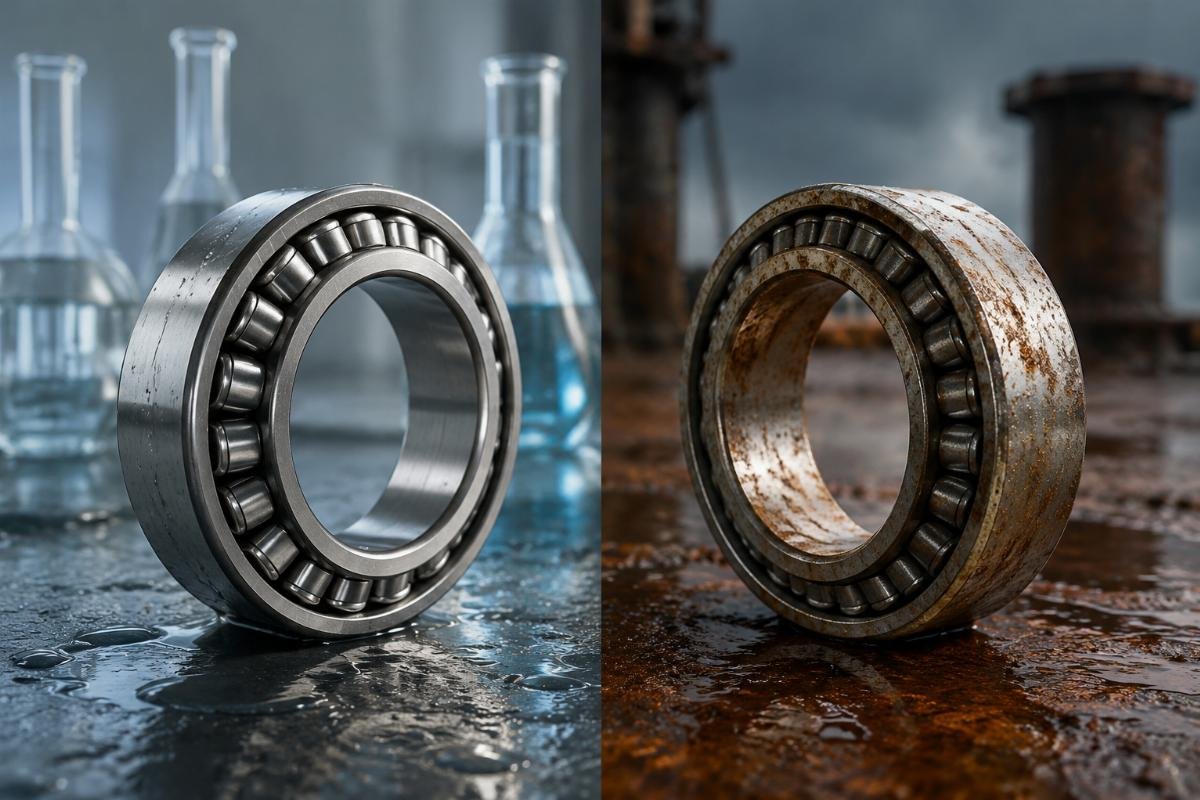
| Stainless Steel Cage | 300% improvement in corrosion resistance | Off-road and marine vehicles |
| Modified Clearance (C3/C4) | Reduced operating temperature | Heavy-duty braking applications |
| P6 Precision Grade | Optimal balance of accuracy and cost | Most OEM production applications |
For a mining fleet operator in Chile needing bearings for off-road vehicles operating in harsh conditions, we recommended 32317 tapered roller bearings with stainless steel cages instead of their standard chrome steel units. The modified design underwent 1000-hour salt spray testing (exceeding ISO 9227 requirements) and showed 47% less corrosion compared to their previous bearings. The 200-unit order was delivered in three phased shipments over three months, utilizing our self-operated warehousing in South America to meet their production schedule without inventory overload.
- Dynamic Load Rating – Minimum 120kN for passenger vehicles, 250kN+ for commercial trucks
- Fatigue Life – L10 life should exceed 100,000 km under normal operating conditions
- Temperature Range – -40°C to +120°C for standard applications, +150°C for high-performance vehicles
- Cage Material – Steel for high load applications, polyamide for reduced friction
- Sealing Options – Contact seals for muddy environments, non-contact for high-speed applications
How to Evaluate a Reliable Tapered Roller Bearing Supplier for Automotive Applications?
Certifications and traceability systems are more important than proximity for ensuring supply chain stability. Automotive bearing buyers should prioritize suppliers with robust quality management systems and flexible logistics capabilities to navigate industry disruptions.
| Evaluation Criteria | Minimum Requirements |
|---|---|
| Quality Certifications | IATF 16949 mandatory, ISO 9001 as baseline |
| Traceability System | Full material certification from raw steel to finished product |
| Technical Support | In-house engineering team for application-specific modifications |
| Delivery Capability | 72-hour standard delivery for common sizes, emergency options available |
| Quality Control | 100% dimensional inspection and material verification |
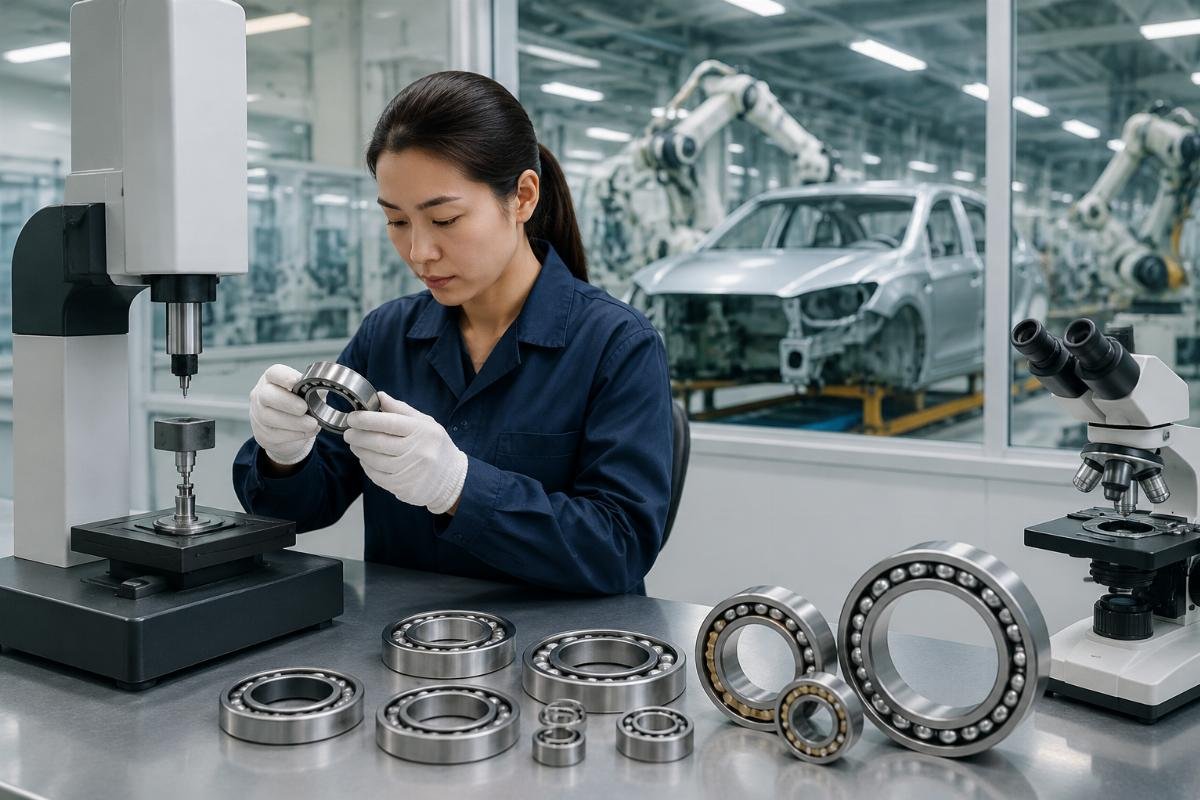
Our global client base includes Tier 1 automotive suppliers who initially hesitated to source from China due to quality concerns. By implementing a transparent traceability system that provides material certificates, manufacturing lot codes, and anti-counterfeiting verification for every bearing, we've successfully supplied over 1 million units with a 99.97% quality rate. Our 10,000+ SKU inventory allows standard models to ship within 72 hours, while custom solutions like modified clearance bearings or stainless steel components are delivered within agreed project timelines.
1.


Leave a Reply