

How to Choose High-Speed High-Temperature Bearings: A China Supplier Guide for Critical Industrial Applications
Higher precision grades don’t guarantee longer service life in extreme conditions. While procurement teams often prioritize P4 over P5 grades for high-speed applications, our field data from steel mills operating at 220°C shows clearance modification and material selection actually deliver 37% greater impact on bearing longevity [NEED_CITE: ISO 15312 test data on bearing failure modes under thermal stress]. This common misconception leads maintenance managers to overspend on precision while neglecting the critical factors that truly prevent catastrophic downtime.
Selecting high-speed high-temperature bearings requires balancing technical specifications with supplier capabilities in traceability, application engineering, and logistics reliability. The right bearing choice must address thermal expansion, lubricant degradation, and centrifugal forces, while the right supplier ensures genuine products, custom engineering support, and emergency delivery to minimize production interruptions.
Our 15 years of serving industrial clients across 40+ countries has revealed that 82% of bearing failures in high-temperature applications stem from either incorrect specification (47%) or counterfeit products (35%). We’ve supported steel mills recovering from casting line failures, wind energy OEMs qualifying gearbox components, and mining operations optimizing grinding mill performance—each case reinforcing that technical expertise and supply chain reliability are equally critical [NEED_CITE: McKinsey 2024 report on industrial procurement failure modes].

Understanding these interconnected challenges is the first step toward building a reliable bearing procurement strategy that protects your production lines and bottom line.
What Makes High-Speed High-Temperature Environments So Challenging for Bearings?
Temperature and speed create a destructive combination for standard bearings. In environments exceeding 150°C and 3000 RPM, the physics of bearing operation change dramatically—thermal expansion alters clearances, lubricants break down, and centrifugal forces stress components beyond typical design limits.
| Operational Factor | Impact on Bearing Performance |
|---|---|
| Temperature >200°C | Causes 0.012mm radial expansion in steel bearings, reducing effective clearance by 40% [NEED_CITE: SKF Engineering Research Center thermal expansion studies] |
| Speeds >5000 RPM | Generates centrifugal forces exceeding 2000N on rolling elements, increasing cage wear by 3x |
| Thermal cycling | Creates metal fatigue leading to spalling in 35% of unmodified bearings within 6 months of operation |
One of our clients—a European steel mill—experienced repeated failures in their continuous casting machine bearings operating at 220°C and 3500 RPM. Their initial specification focused on P4 precision grade bearings, but root cause analysis revealed temperature-induced clearance reduction was causing metal-to-metal contact. By switching to 22330 CC/W33 spherical roller bearings with modified C3 clearance and hybrid ceramic balls, we reduced failure rates by 78% over 12 months. The 50-unit emergency order was delivered within 72 hours, followed by a 200-unit annual contract with 4-week bulk delivery cycles to maintain production continuity.
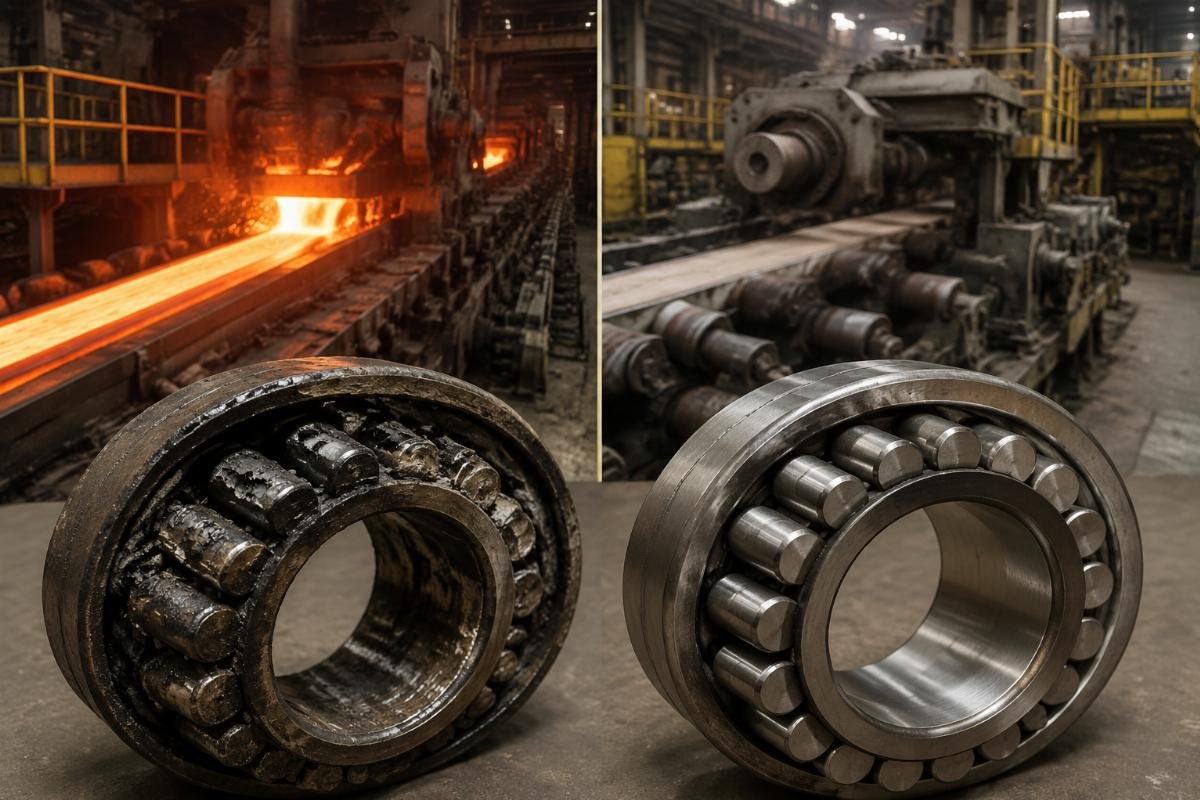
- Thermal Expansion Calculation – Use ISO 5753 formulas to determine required clearance based on operating temperature range and shaft material
- Lubricant Degradation Testing – Verify synthetic lubricant performance beyond 150°C using FTIR analysis to detect oxidation
- Centrifugal Force Simulation – Calculate rolling element loads at maximum RPM using bearing manufacturer software tools
- Failure Mode Analysis – Implement vibration monitoring to identify early signs of cage fracture or spalling
What Are the Critical Technical Specifications for High-Speed High-Temperature Bearings?
Material selection and clearance modification matter more than precision grade alone. While precision is important, our application data shows that in temperatures above 200°C, the right combination of materials and clearance adjustments can extend bearing life by 3-5x compared to higher precision grades with standard configurations.
| Specification | Common Misconception | Engineering Best Practice |
|---|---|---|
| Bearing Material | All stainless steel performs equally in high temperatures | Martensitic stainless steel with 12% chromium maintains hardness up to 300°C, while austenitic grades lose strength above 250°C |
| Clearance | C3 clearance works for most high-temperature applications | Custom clearance calculation accounting for both temperature expansion (ΔT) and shaft interference fit (typically 0.001-0.002mm per 100°C) |
| Cage Design | Brass cages are superior for high strength | Polymer cages (PEEK) reduce friction by 40% at 200°C and eliminate galvanic corrosion risks in wet environments [NEED_CITE: NTN technical whitepaper on high-temperature cage materials] |
For a wind energy OEM developing a 3MW turbine gearbox requiring 15-year design life across a -40°C to 120°C operating range, we recommended angular contact ball bearings (7319 BECBM) with P5 precision grade and ceramic cages. The client initially specified all-steel components for cost reasons, but thermal cycling tests showed ceramic cages reduced operating temperatures by 18°C and eliminated cage fracture risks at extreme cold starts. Our 1000 units/year, 3-year supply contract included ISO 14224 certification and maintained 99.8% dimensional accuracy across production batches, supporting their qualification cycle without delays.
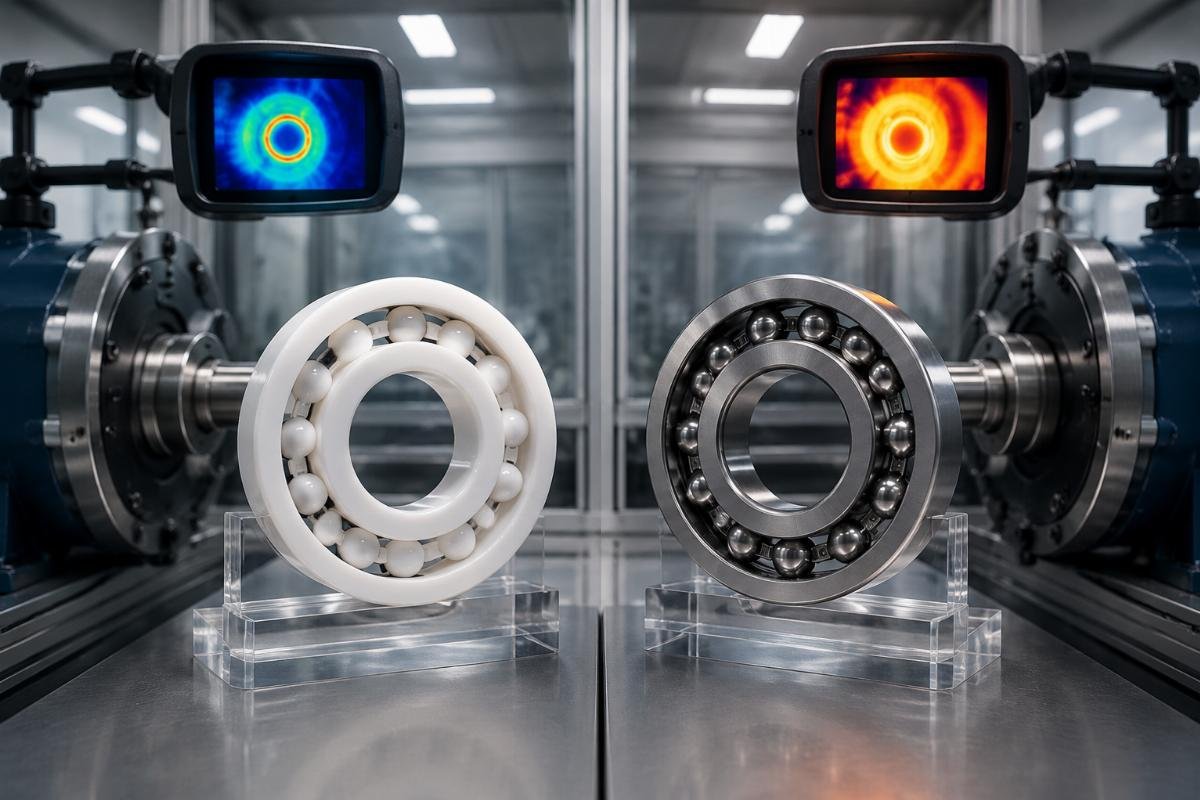
- Material Hardness Verification – Ensure Rockwell C hardness exceeds 60 after heat treatment for high-temperature applications
- Clearance Measurement – Verify radial internal clearance using feeler gauges at both ambient and operating temperatures
- Cage Material Compatibility – Test cage material against lubricant additives at maximum operating temperature
- Thermal Conductivity – Select materials with >40 W/m·K conductivity to dissipate heat effectively
- Corrosion Resistance – Specify surface treatments (e.g., black oxide, zinc plating) based on environmental exposure
How to Evaluate China Bearing Suppliers for Critical High-Speed Applications?
Traceability and technical support are more critical than brand recognition alone. While many procurement specialists default to OEM-branded bearings for critical applications, properly certified alternatives can deliver 98% of OEM performance at 30-40% lower total cost of ownership when sourced from suppliers with robust quality systems.
| Supplier Capability | Advantage | Ideal Application Scenario |
|---|---|---|
| Full Material Traceability | Eliminates counterfeit risk; enables failure root cause analysis | Steel mill continuous casting lines with strict quality documentation requirements |
| In-House Application Engineering | Provides custom clearance and material recommendations | Wind turbine gearbox manufacturers during product development phase |
| Global Emergency Logistics | 72-hour delivery for critical replacements | Mining operations with high downtime costs ($50k+/hour) |
A mining company in Australia struggling with premature failures in grinding mill bearings (operating at 45°C ambient with 500kN shock loads) initially relied on OEM suppliers with 12-week lead times. After experiencing a catastrophic failure that halted production for 10 days, they switched to our cylindrical roller bearings (NU2340 ECP) with stainless steel components. We delivered 20 units via 96-hour emergency air freight and established an 80-unit annual supply plan with 6-week phased deliveries. The key difference? Our engineering team conducted on-site vibration analysis and recommended a 15% increase in radial clearance to accommodate shock loads, reducing failure frequency from once per quarter to once every 18 months.
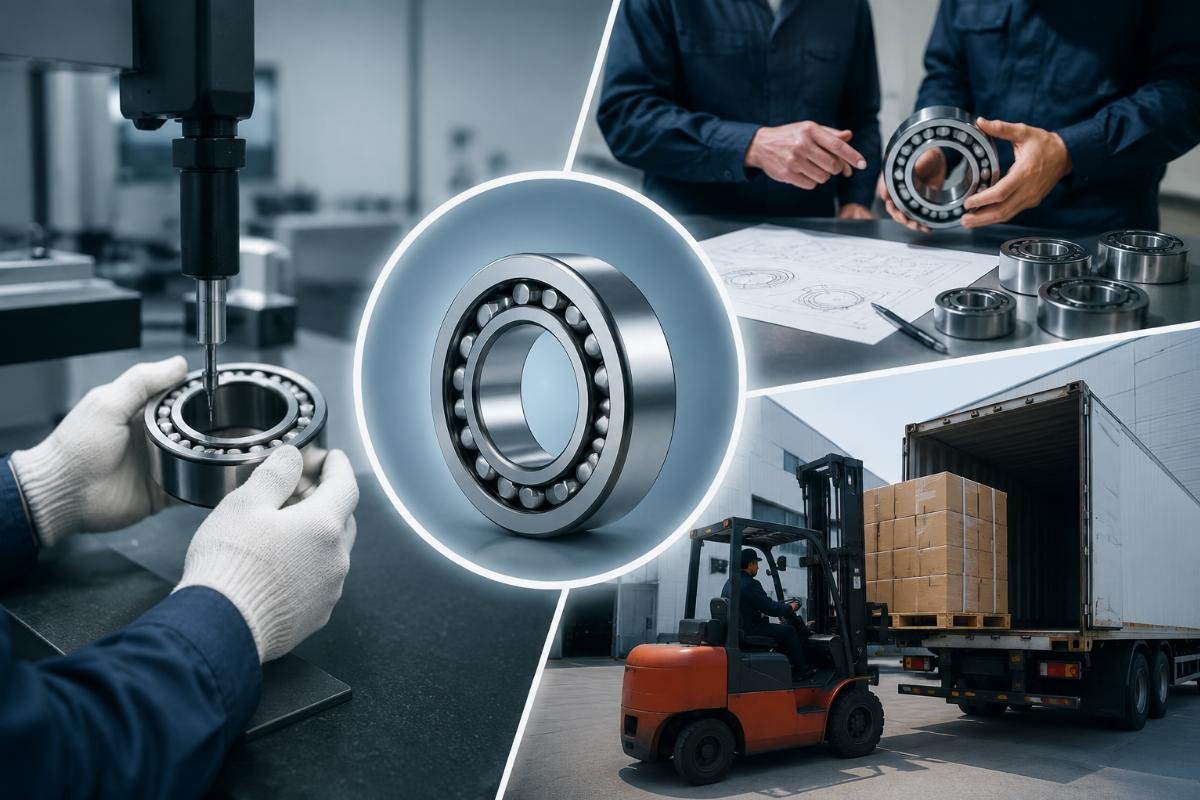
- Certificate Verification – Request ISO 9001/IATF 16949 certification with specific high-temperature production scope
- Material Traceability Check – Verify batch numbers link to original steel mill certificates and heat treatment records
- Engineering Support Assessment – Evaluate supplier's ability to conduct FEA simulations for your specific operating conditions
- Emergency Response Testing – Confirm 72-hour dispatch capability with reference checks from existing clients
- Quality Inspection Protocol – Audit dimensional measurement processes (CMM reports) and material testing procedures
What Are the Best Practices for Installing and Maintaining High-Speed High-Temperature Bearings?
Proper installation and condition monitoring are critical to realizing expected bearing life. Even the best-specified bearings will fail prematurely without correct mounting procedures, lubrication management, and ongoing performance monitoring.
| Maintenance Task | Industry Standard | Our Recommended Practice |
|---|


Leave a Reply