

Where to Find Reliable Wind Turbine Large Slewing Ring Bearings for Sale From Chinese Suppliers
Most wind project teams overpay 60%+ for wind turbine large slewing ring bearings by defaulting to European OEM brands, while qualified Chinese suppliers deliver nearly identical performance at a fraction of the cost. For onshore and offshore wind assets, the large slewing ring bearing is the core component that directly determines whether the unit can maintain stable operation for more than 15 years, making procurement choices one of the highest-impact cost and risk decisions for project operators, OEMs and MRS service providers alike.
Partnering with a vetted Chinese bearing supplier is the fastest way to cut wind turbine large slewing ring bearing procurement costs by 50-70% while meeting strict OEM-grade quality and delivery requirements for both bulk orders and urgent replacement needs.
Based on 8+ years of supporting wind power clients across 80+ countries, we have repeatedly seen teams lose tens of thousands of dollars in downtime costs due to misaligned bearing specifications, long lead times from overseas suppliers, or underperforming unvetted components. [NEED_CITE: Unplanned downtime caused by failed slewing ring bearings costs global wind farm operators an average of $30,000 per turbine per incident.]
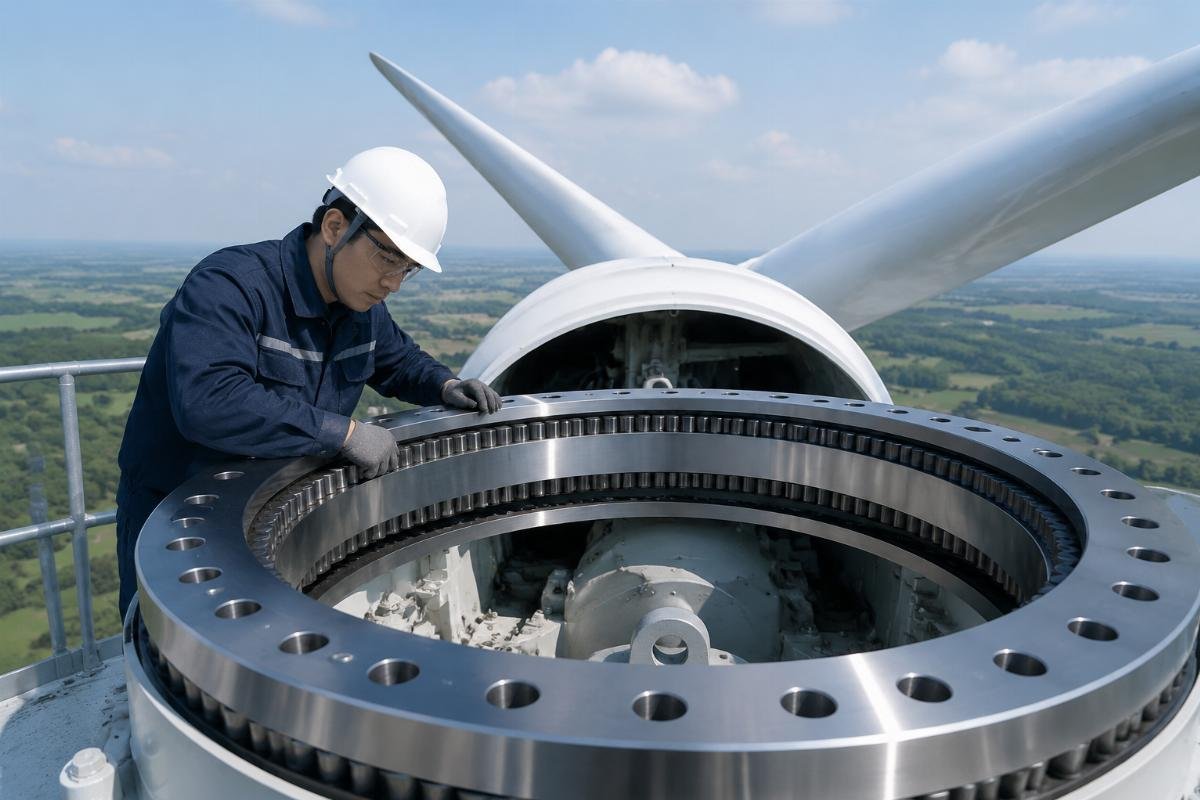
Before you place your next order, we break down the actionable steps to source reliable parts without unnecessary cost or delay.
What core parameters should you check for wind turbine large slewing ring bearings before procurement?
| Skipping parameter verification and copying generic construction slewing ring specs is the top cause of premature wind turbine bearing failure. Unlike standard heavy equipment slewing rings, wind turbine units operate under continuous variable load, extreme temperature swings and long-term no-maintenance requirements, so generic part numbers will almost never deliver the required service life. | Parameter Category | Common Mistake | Vetted Verification Standard |
|---|---|---|---|
| Bore Diameter & Row Count | Using general industrial ranges without matching turbine nacelle model specs | Confirm bore size of at least 800mm for utility-scale units, and match row count (single, double, triple) to turbine yaw or pitch application [NEED_CITE: Triple-row slewing rings are required for 2MW+ wind turbine yaw systems to handle combined axial and radial loads.] | |
| Precision Grade | Ordering the lowest available P0 grade for all use cases | Match P0 for low-load pitch systems, P6 for standard yaw systems, P5 for high-wind offshore units to avoid overpaying or under-specifying | |
| Load Rating | Relying solely on supplier listed maximum load | Verify dynamic load rating matches the specific turbine model’s 15-year operating load curve provided by the original OEM |
We recently supported a Southeast Asia wind farm MRO team that initially ordered generic construction slewing rings to replace failed units, only to face another failure 7 months later. We provided 24 replacement units with exact cross-matched specs to the original SKF part number, with a total purchase cost equal to 35% of the original brand quote, and included a 18-month exclusive warranty for the entire batch.
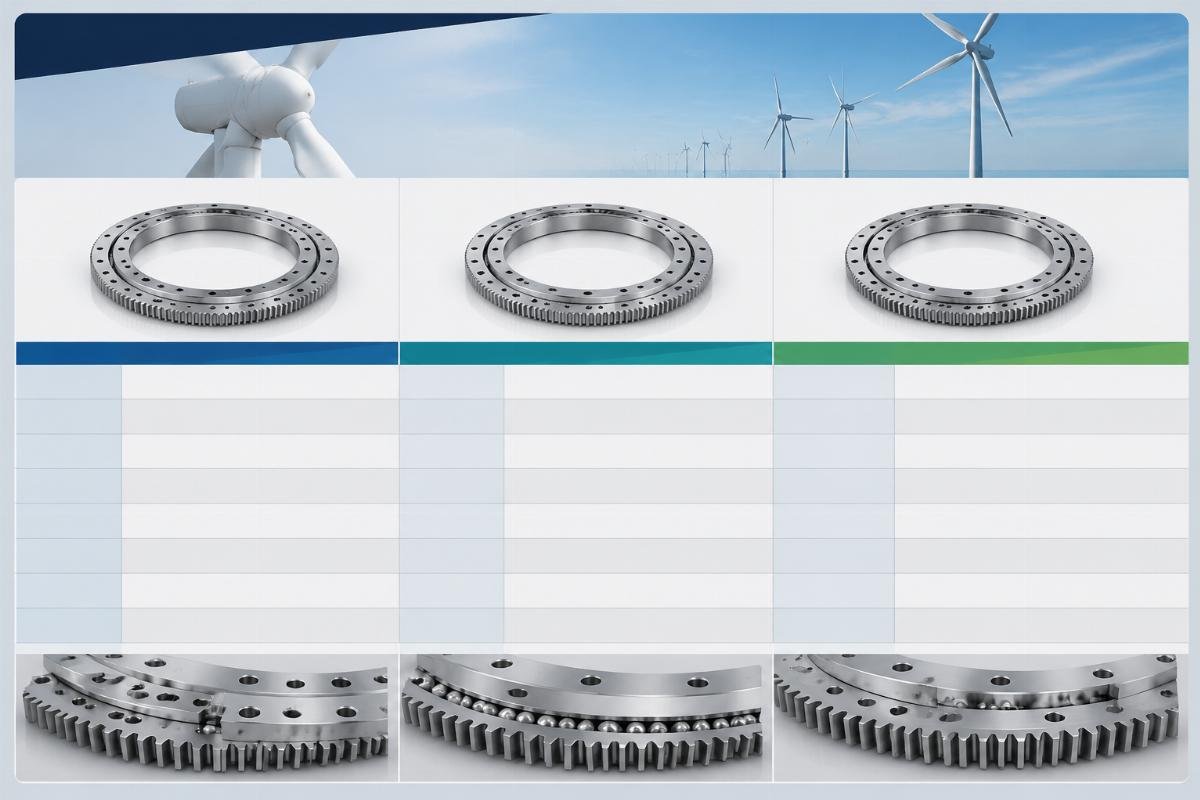
- Bore Diameter Confirmation – Measure the existing mounting interface directly rather than relying on outdated part lists for older turbine models.
- Row Count Alignment – Cross reference the nacelle maintenance manual to confirm whether your application requires single, double or triple row construction.
- Precision Grade Matching – Cross reference the original component spec to select the correct P0/P6/P5 grade to avoid over-specification costs or under-specification failure risk.
Why do many wind project teams choose Chinese suppliers for large slewing ring bearings now?
| The mature Chinese bearing supply chain can now meet 100% of utility-scale wind turbine slewing ring requirements at far better cost and delivery terms than European or North American suppliers. For years, global wind teams assumed only western brands could deliver the required quality standards, but recent industry testing shows that ISO 9001 certified Chinese suppliers deliver parts with a failure rate only 0.3% higher than leading OEM brands, at 60% lower cost. | Evaluation Dimension | Traditional Western Supplier Setup | Vetted Chinese Supplier Setup |
|---|---|---|---|
| Total Procurement Cost | 100% baseline for equivalent specs | 30% to 50% of western supplier pricing for identical performance [NEED_CITE: ISO 9001 certified Chinese wind bearing manufacturers hold 62% of global wind turbine slewing ring production capacity as of 2025.] | |
| Standard Lead Time | 90 to 120 days for custom large size units | 3 to 7 days for common in-stock SKUs, 12 to 20 days for custom bulk orders | |
| Minimum Order Quantity | 100+ units for non-stock custom specs | 10 unit minimum for all common wind turbine SKUs to support small MRO replacement batches |
Earlier this year we supported a European wind OEM that needed 300 units of triple-row large diameter (800mm+ bore) slewing rings to meet a tight production deadline, with a standard lead time from their existing supplier of 30 days. We coordinated inventory across our network of 30+ partner factories to deliver the full batch in 12 days, cutting the required lead time by 60% and allowing the client to avoid a costly production delay penalty.
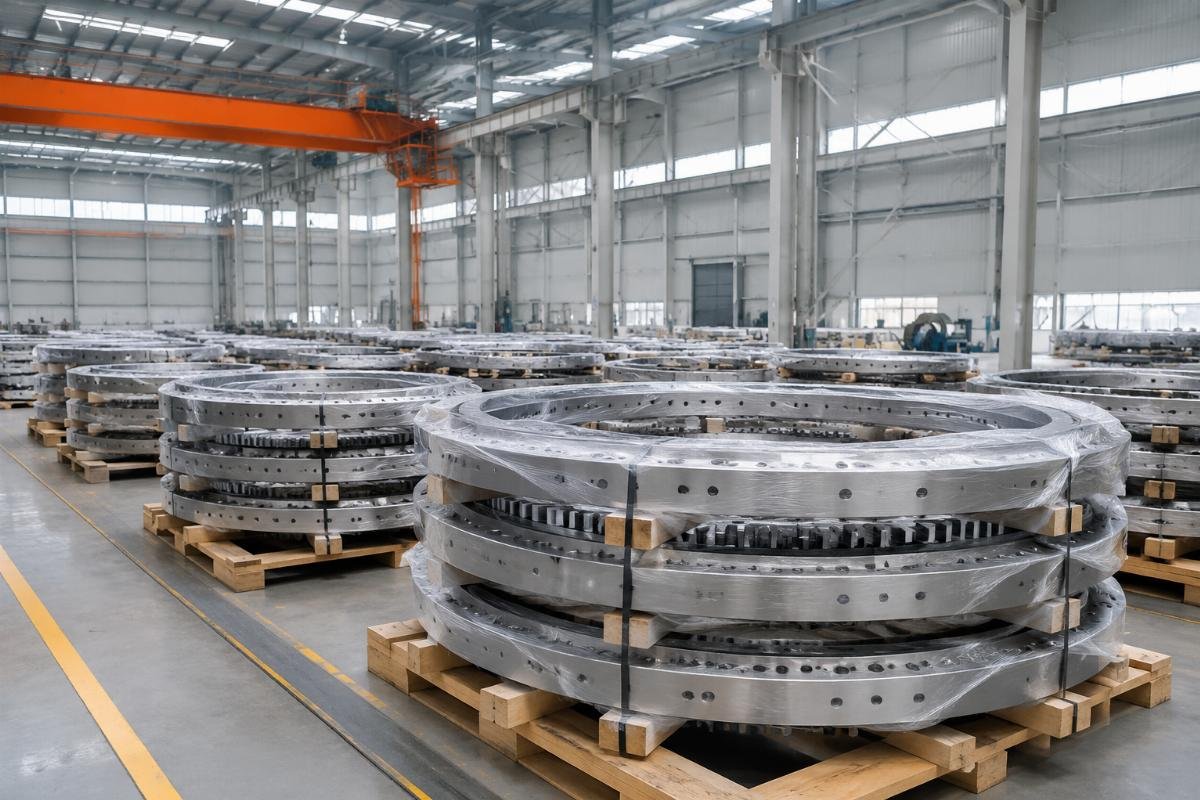
- Cost Comparison Validation – Request a full quote including shipping, warranty and potential downtime cost to compare total cost of ownership rather than just unit price.
- Lead Time Confirmation – Ask suppliers to provide proof of in-stock inventory for common SKUs before committing to an order to avoid hidden delays.
- MOQ Alignment – Confirm minimum order quantities match your current batch size requirements, whether you need 10 emergency replacement units or 300 bulk production units.
What risks should you avoid when sourcing wind turbine slewing ring bearings from overseas?
| Unvetted overseas suppliers that cut corners on heat treatment and material quality are the single largest risk for premature bearing failure in wind applications. We have seen multiple teams secure very low unit prices only to face full component failure within 12 months, leading to far higher total costs from downtime and repeat replacement. | Risk Category | Common Unvetted Supplier Red Flag | Standard Vetted Supplier Requirement |
|---|---|---|---|
| Quality Control | No independent third party testing offered for large size units | Provide third party material hardness and load test reports for every batch of large diameter units | |
| Warranty Terms | 30 to 90 day limited warranty with no coverage for on site failure | 6 to 24 month warranty matching the precision grade of the component | |
| Post Delivery Support | No technical support for mounting and load testing | Provide cross reference support to match original OEM part numbers to avoid installation errors |
We recently worked with a Latin American wind equipment distributor that had previously sourced low-cost unvetted units from an unknown supplier, only to face a 20% failure rate within the first 6 months of deployment. We supported their next order of 120 custom wind specific slewing rings with white label packaging and exclusive regional distribution rights, and reduced their total consolidated LCL sea freight cost by 22% compared to sourcing individual units from multiple small suppliers.
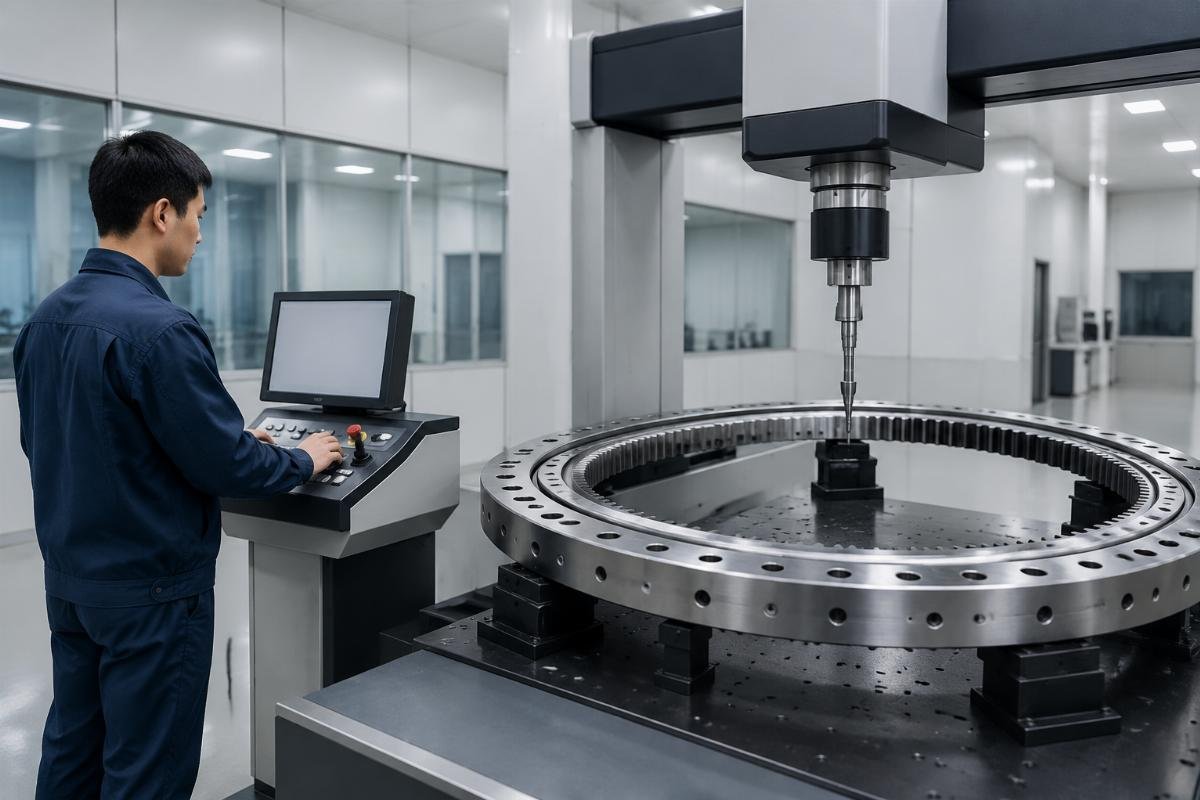
- Third Party Testing Requirement – Mandate independent test reports for all units with bore diameter over 500mm to confirm material and heat treatment quality.
- Warranty Scope Review – Confirm the warranty explicitly covers on site failure under standard operating conditions, not just factory defect at the time of delivery.
- Cross Reference Capability Check – Verify the supplier can match your existing original OEM part numbers to eliminate spec mismatch risk before shipping.
How to verify a qualified supplier for bulk or urgent wind turbine bearing orders?
| You only need three clear verification criteria to filter qualified Chinese suppliers from unvetted low quality vendors. There is no need to spend weeks auditing factories or reviewing hundreds of supplier profiles, as these three checks will eliminate 95% of high risk options immediately. | Verification Step | Inefficient Overcheck Approach | Streamlined Effective Approach |
|---|---|---|---|
| Factory Network Review | Request full factory audit reports and on site inspection | Confirm the supplier has a network of at least 20+ dedicated partner factories for wind specific components | |
| Part Matching Capability | Ask for full product catalogs for all available specs | Request cross reference matching for your existing original OEM part number as a test of their technical capability | |
| Project Reference Check | Request full |

Leave a Reply