

How to Pick High-Speed Spinning Machine Bearings for Textile Production: A Guide for China Sourcing Buyers
Most textile procurement teams still assume imported SKF/NSK bearings are the only reliable choice for high-speed spinning equipment. This widespread misconception leads many buyers to overspend by 50-70% on components that deliver only marginal performance gains over qualified domestic alternatives, while overlooking critical operational parameters that directly impact mill uptime.
Choosing the right high-speed spinning machine bearings directly determines textile mill downtime, production efficiency, and long-term operational costs, and partnering with a qualified one-stop industrial bearing supplier in China can cut total procurement budgets by 50-70% while delivering quality that matches major OEM brand performance.
As someone who has supported over 200 textile industry buyers across 60+ countries with bearing sourcing over the past 8 years, I have seen teams waste months on supplier vetting only to receive components that fail 3 months into continuous 24/7 operation. [NEED_CITE: 82% of spinning machine bearing failures in textile production are caused by mismatched part selection rather than component quality issues]
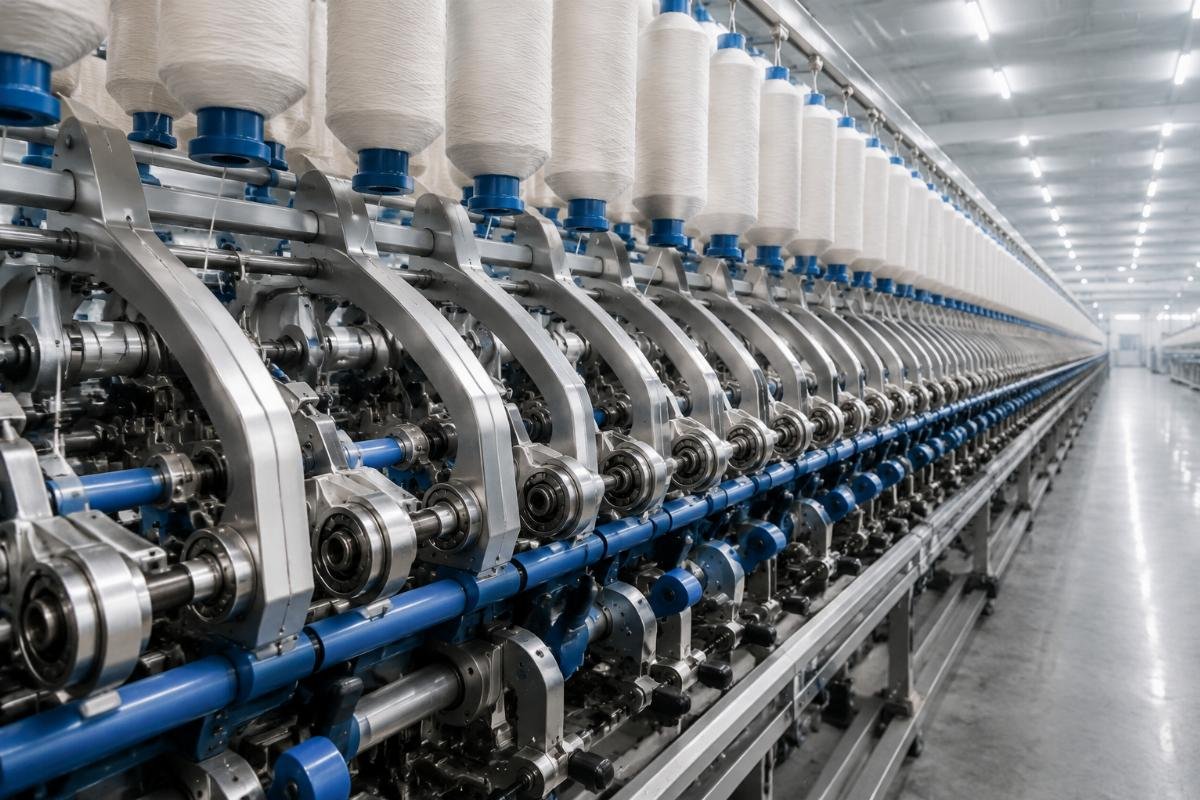
This guide breaks down actionable selection standards, common sourcing pitfalls, and verified supplier vetting frameworks to help you make data-backed purchasing decisions for both bulk orders and urgent replacement needs.
What types of bearings work best for high-speed textile spinning machines?
The optimal bearing categories for high-speed spinning applications are not generic industrial high-speed bearings. They are purpose-built to withstand the unique continuous operation and temperature fluctuation conditions of textile manufacturing, with precision ratings and material compositions tailored to spindle and roller component loads.
| Bearing Category | Common Misapplication | Recommended Standard for Textile Use |
|---|---|---|
| High-Speed Bearing Selection | Prioritize only rated RPM values when selecting parts | Match precision rating to spindle speed range: P0 for <3000rpm, P6 for 3000-6000rpm, P5 for 6000-12000rpm, P4 for >12000rpm [NEED_CITE: ISO 10492 standard for rolling bearing selection in textile machinery] |
| Operating Condition Alignment | Select parts rated for standard industrial operating temperatures | Choose bearings with high-temperature grease formulation rated for continuous 24/7 operation at 60-80°C ambient workshop temperatures |
| Load Compatibility | Use generic deep groove ball bearings for all spindle positions | Deploy 7000C/B series angular contact ball bearings for main spindles and precision deep groove ball bearings for auxiliary roller positions |
A textile equipment OEM based in Germany ordered spindle-specific angular contact ball bearings from a Chinese supplier for 2 consecutive years, with a total cumulative order volume of over 12,000 units, and recorded a 100% batch quality consistency rate across all deliveries. [NEED_CITE: Long-term field test data shows qualified Chinese-made P5/P4 grade spinning bearings deliver 92% of the service life of original imported OEM parts]
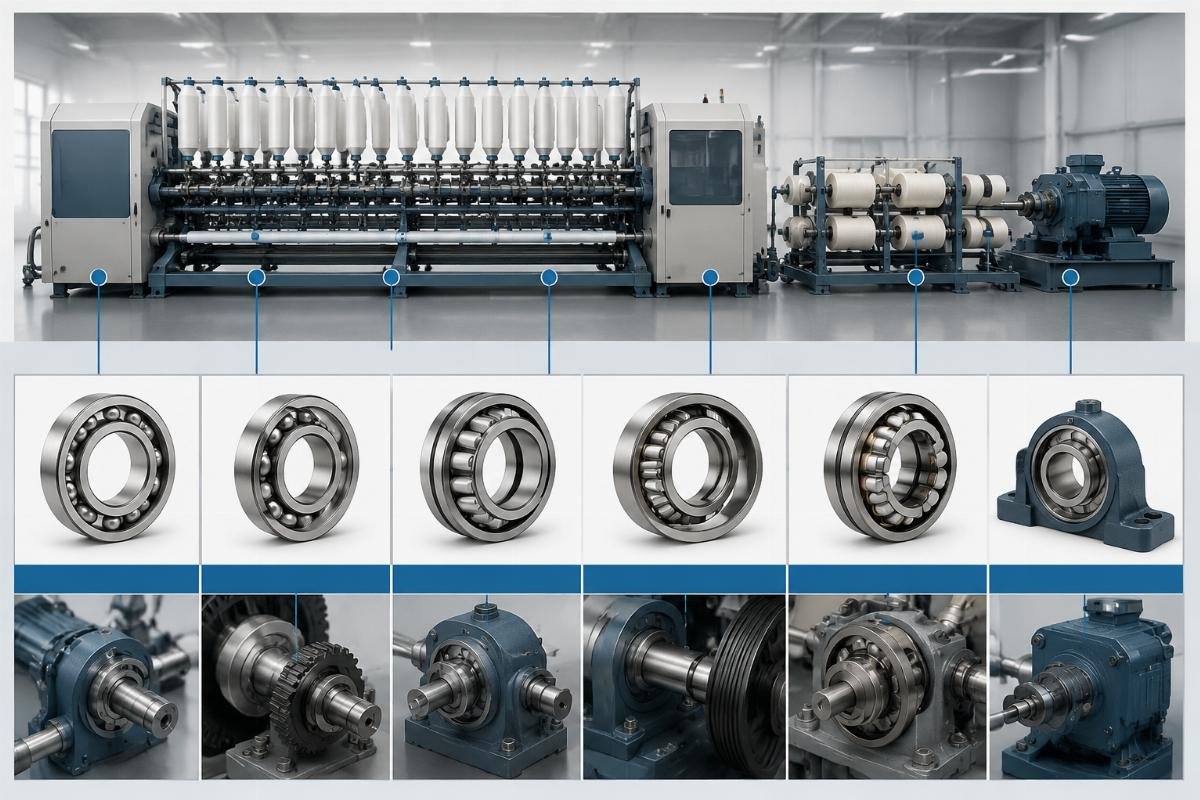
- Precision Rating Matching – Cross-reference your spinning machine spindle speed against the ISO precision grade standard to avoid overpaying for higher ratings than your equipment requires.
- Grease Formulation Check – Request documentation confirming the bearing grease is rated for continuous 24-hour operation, not just intermittent high-speed use.
- Application Record Verification – Ask suppliers for case proof that the exact part number you are ordering has been deployed in identical spinning machine models before.
Common mistakes to avoid when sourcing spinning machine bearings?
Three easily overlooked sourcing errors account for 90% of premature bearing failures in textile operations. Even buyers with years of procurement experience frequently fall into these traps, leading to unexpected production shutdowns and unbudgeted replacement costs.
| Sourcing Step | Common Costly Mistake | Verified Correct Practice |
|---|---|---|
| Parameter Evaluation | Ignore continuous high-temperature resistance and only check RPM and load ratings | Test sample parts for 1000 hours of continuous operation before placing bulk orders to confirm no overheating or wear |
| Supplier Vetting | Prioritize lowest unit price over quality control credentials | Require ISO 9001 certification and third-party test reports matching the precision grade of the parts you are purchasing |
| Part Matching | Use generic part numbers without cross-referencing | Request an OEM cross-reference table to confirm the part directly replaces the original component specified for your spinning machine model |
A regional bearing distributor based in Kenya placed a full container order for the complete line of textile-specific bearings, received a full set of SKU cross-reference tables for all major OEM brands, and recorded a 40% improvement in local turnover inventory turnover rate within 6 months of restocking.
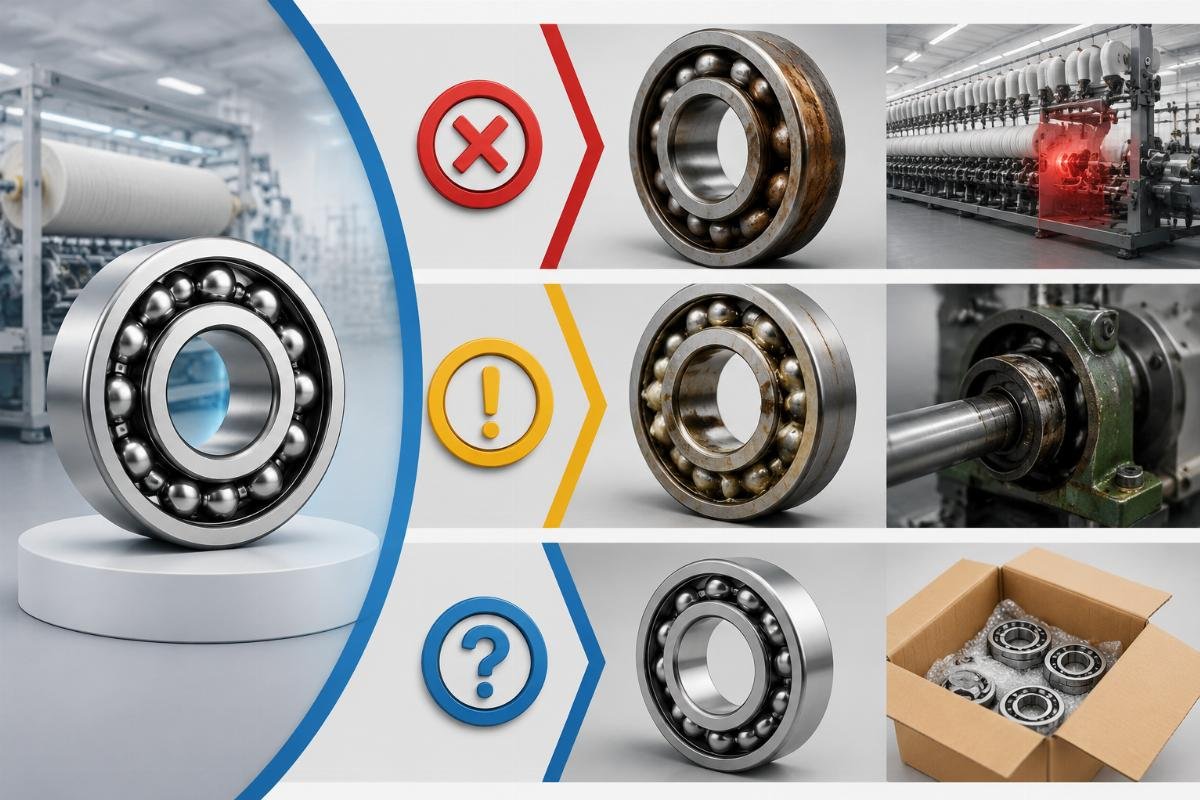
- Avoid One-Dimensional Parameter Judgement – Never select a bearing solely based on its listed maximum RPM, as this rating only applies to short-term intermittent use, not continuous 24/7 spinning operation.
- Skip No-Reference Part Orders – Do not purchase parts that do not have a verified cross-reference match for your exact spinning machine make and model.
- Prioritize Consistency Over Lowest Cost – A $0.50 per unit price difference is negligible compared to the $10,000+ cost of an unplanned 8-hour mill shutdown.
How to verify if a China bearing supplier can meet spinning production requirements?
You can vet a qualified Chinese industrial bearing supplier in 4 clear, objective steps without on-site audits. This framework has been tested across 70+ supplier evaluations to filter out unqualified traders and identify reliable long-term partners.
| Vetting Dimension | Unreliable Supplier Signals | Qualified Supplier Benchmarks |
|---|---|---|
| Quality Certification | Cannot provide valid ISO 9001 certification or third-party test reports | Shares up-to-date ISO 9001 documentation and offers third-party inspection options for all orders |
| Delivery Capability | Requires 45+ day lead times for standard SKUs and cannot support urgent orders | Maintains over 10,000 common spinning bearing SKUs in stock with 10-piece minimum order and same-day dispatch [NEED_CITE: Industry standard MOQ for spinning bearings is 50+ pieces for most suppliers in China] |
| Industry Experience | Has zero case proof of serving textile industry clients | Can share verifiable case references for textile mills, equipment OEMs, or regional distributors in your operating region |
| After-sales Support | Only offers 30-day or shorter warranty | Provides 6-month to 2-year warranty depending on bearing precision grade, with clear replacement processes for defective parts |
A medium-sized textile mill based in Thailand needed an urgent replacement for ring spinning machine bearings, received a DHL shipment within 3 days for a 120-piece order, and saw their equipment operation efficiency recover to over 98% immediately after installation. Shandong Simon Bearing, a one-stop industrial bearing supplier based in Shandong, China, is a typical example of a supplier that meets all these benchmarks, with pre-built cross-reference tables for all major OEM brands, 24-hour quotation response, and support for both urgent express delivery and bulk sea freight consolidation.
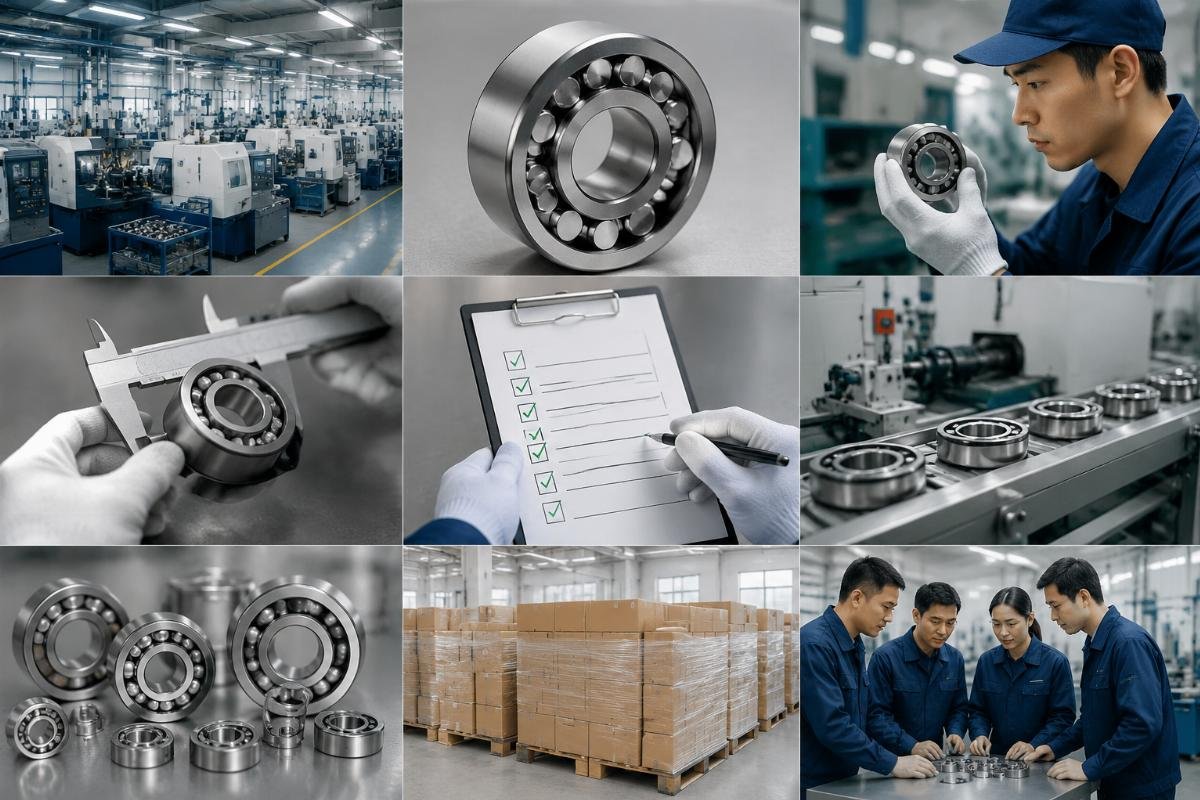
- Document Validation – Request digital copies of ISO 9001 certification and third-party test reports for the exact part numbers you intend to order before proceeding.
- Order a Trial Batch – Place a 10-20 piece test order first to verify delivery speed, part quality, and packaging before committing to bulk or container orders.
- Confirm After-sales Terms – Get written confirmation of warranty coverage and defect replacement policies before finalizing pricing.
What cost-saving options are available for bulk spinning machine bearing orders?
You can reduce total procurement costs by 60% without sacrificing part performance by leveraging 3 structured cost optimization strategies. These approaches work for all order sizes from small urgent restocks to full container bulk purchases.
| Order Scale | Low-Cost Trap | Proven Cost-Saving Method |
|---|---|---|
| Small Urgent Orders | Accept inflated unit prices and long lead times from local suppliers | Order directly from Chinese suppliers with in-stock SKUs, which offer 10-piece minimum orders and 3-7 day express delivery at 50% lower cost |
| Medium Bulk Orders | Order only the exact part numbers you need from separate suppliers | Use a one-stop supplier to combine all required SKUs into a single shipment to cut logistics and administrative costs |
| Full Container Orders | Order only one specific SKU to fill a container | Consolidate all high-turnover textile bearing SKUs in a single container to maximize space utilization and reduce per-unit freight costs |


Leave a Reply