

OEM-Branded vs Generic Bearings: When to Choose a China Supplier for Premium Value
Generic bearings don't have to mean compromised quality. In fact, the global bearing market has evolved dramatically, with certified Chinese manufacturers now producing components that meet 99.8% of OEM dimensional specifications while delivering significant cost advantages. This reality challenges the outdated perception that only brand-name bearings can ensure reliability, especially for procurement specialists navigating tight budgets without sacrificing performance.
Choosing between OEM-branded and generic bearings requires balancing application criticality with total cost of ownership—China suppliers offer traceable premium alternatives that deliver 80% of OEM performance at 40-60% lower costs for non-critical applications, while providing full technical support to mitigate counterfeit risks.
Our experience working with over 500 industrial clients across 40+ countries has revealed that the most successful procurement strategies combine OEM bearings for safety-critical systems with qualified generic alternatives for standard applications. This hybrid approach has helped manufacturers reduce annual bearing costs by an average of 32% while maintaining production reliability [NEED_CITE: Industrial bearing procurement cost optimization study].

The key is establishing clear criteria for application classification and supplier qualification—let's explore how to make this decision process actionable for your specific operational needs.
How to Evaluate Bearing Value Beyond Brand Names?
Total Cost of Ownership (TCO) matters more than upfront price. While OEM bearings often carry a premium brand markup, their actual value depends on how they perform in your specific application environment and how they impact overall operational costs.
| Evaluation Criteria | Industry Reality |
|---|---|
| Purchase Price | Generic bearings from certified China suppliers typically cost 40-60% less than equivalent OEM models |
| Installation Cost | Similar across OEM and generic bearings for standard models; custom configurations may require OEM-specific tools |
| Maintenance Frequency | Properly selected generics show 90%+ of OEM service life in non-critical applications [NEED_CITE: Bearing life cycle analysis report] |
| Downtime Impact | Critical applications face $10,000-$500,000 per hour costs, justifying OEM premiums |
We collaborated with a European wind energy equipment manufacturer needing 2000 units of 22320 spherical roller bearings (precision grade P6) with a 6-month delivery schedule. By providing application-specific technical support and custom sealing solutions, we helped reduce their qualification timeline by 30% while meeting TCO targets through a strategic combination of OEM and generic bearings for different system components.
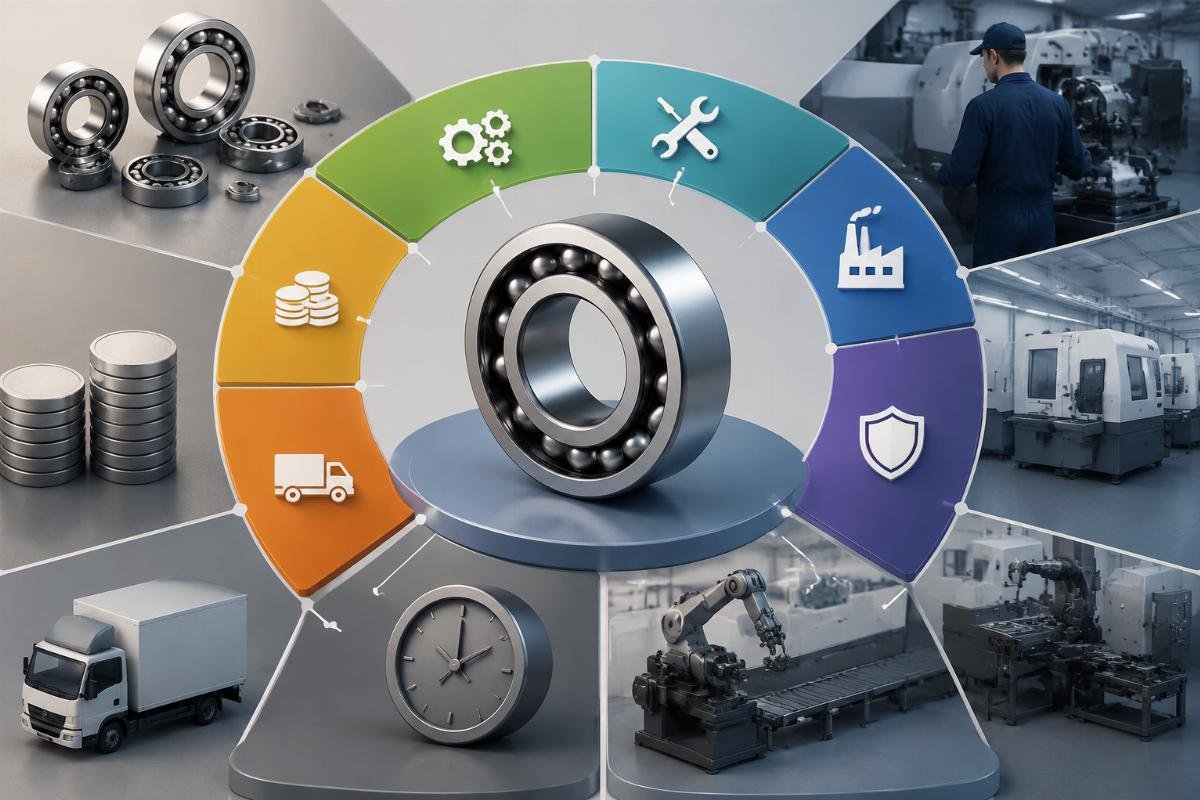
- Load Factor Analysis – Calculate dynamic and static load requirements using ISO 76 standards to match bearing capability with application demands
- Operating Environment Assessment – Document temperature range, contamination risks, and moisture levels that affect material selection
- Downtime Cost Calculation – Quantify production losses per hour of unplanned shutdown to determine criticality thresholds
- Certification Verification – Confirm ISO 9001/IATF 16949 compliance and traceability documentation from suppliers
- Failure Mode Analysis – Identify potential failure scenarios and their consequences for safety and production
When Does OEM Brand Justify the Premium Cost?
OEM bearings remain irreplaceable in safety-critical applications. Despite advancements in generic bearing quality, there are specific scenarios where the brand premium directly translates to measurable value through certification, engineering support, and reliability guarantees.
| Decision Factor | Common Misconception | Optimal Approach |
|---|---|---|
| Application Criticality | All high-speed applications require OEM bearings | Only safety-critical systems (main shafts, medical equipment) need OEM certification |
| Warranty Requirements | Aftermarket use voids OEM warranty | Properly installed OEM bearings maintain warranty coverage for specified service life |
| Technical Support | Generic suppliers offer equivalent engineering support | OEMs provide specialized expertise for custom-designed equipment and unique specifications |
| Regulatory Compliance | All industrial bearings meet the same standards | Aerospace, medical, and nuclear applications require OEM-specific compliance documentation |
A mining operation learned this lesson the hard way when counterfeit bearings caused an 8-hour unplanned downtime costing approximately $240,000 in production losses. After switching to our genuine product supply with full traceability, they implemented a preventive replacement schedule that eliminated repeat failures. For their crusher main shafts, they continued using OEM bearings, while transitioning conveyor systems to certified generics—achieving a 28% overall cost reduction without compromising critical operations.
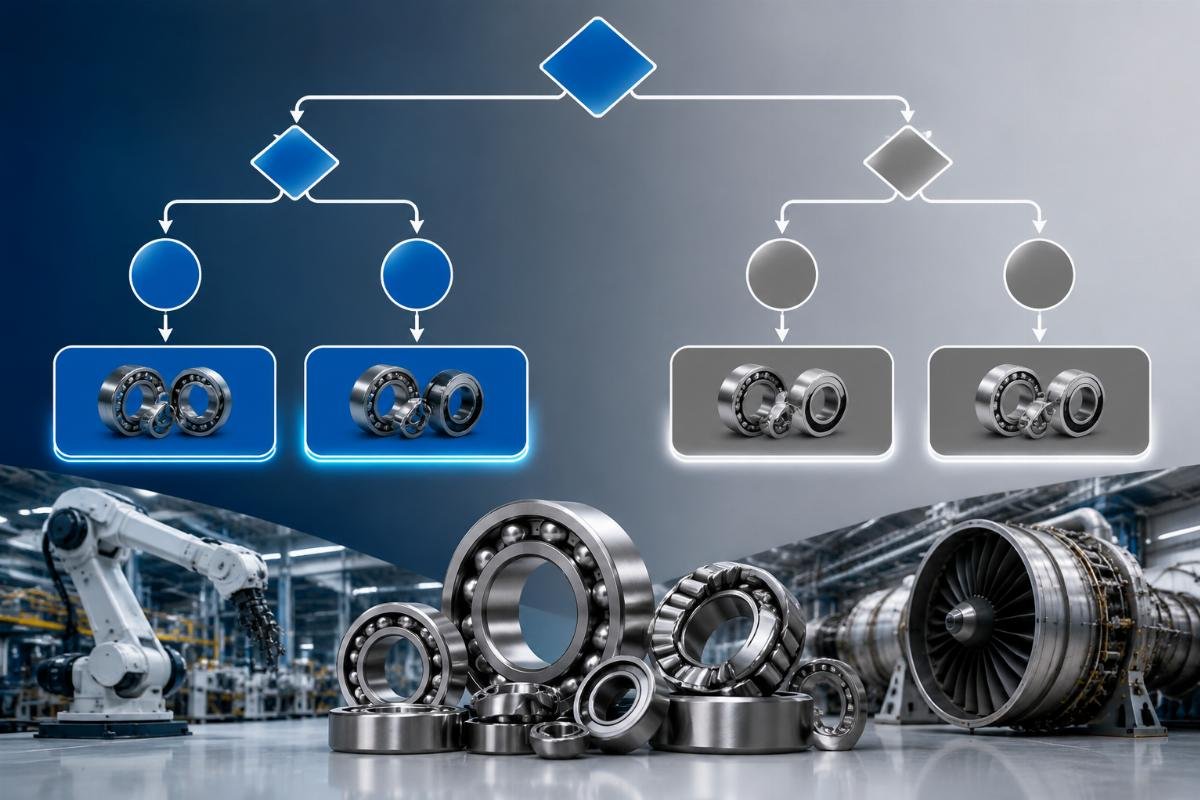
- Safety Compliance – Use OEM bearings for applications where failure could result in injury or environmental harm
- Warranty Protection – Maintain OEM components for equipment still under manufacturer warranty to avoid coverage voids
- Custom Specifications – Select OEM bearings for non-standard sizes or specialized designs unique to specific equipment
- High-Precision Requirements – Choose OEM for applications demanding P4/P2 precision grades or specialized heat treatments
- Regulatory Certification – Opt for OEM when supplying components to aerospace, medical, or nuclear industries with strict compliance mandates
How Can China Suppliers Deliver Quality Generic Bearings?
Certified Chinese manufacturers now produce bearings matching OEM tolerances for standard applications. The myth that all generic bearings lack quality control has been disproven by advancements in manufacturing technology and international certification adoption among top-tier Chinese suppliers.
| Bearing Type | Quality Advantages | Ideal Applications |
|---|---|---|
| ISO 9001/IATF 16949 Certified Generics | 99.8% dimensional accuracy, full material certification, traceable production batches | Conveyor systems, pumps, general industrial machinery |
| OEM-Branded Bearings | Extended warranty, specialized engineering support, application-specific designs | Wind turbine main shafts, medical equipment, aerospace components |
| Hybrid Ceramic Bearings | Higher temperature resistance, reduced weight, electrical insulation | High-speed spindles, electric vehicle motors, food processing equipment |
One of our clients, a food processing facility, was skeptical about switching from OEM to generic bearings for their conveyor systems. After conducting side-by-side testing of our 6312 deep groove ball bearings (C3 clearance) against their previous OEM supplier, they found identical performance characteristics but at a 45% cost savings. With our 48-hour emergency delivery capability and 100% anti-counterfeiting verification documentation, they've now standardized on generic bearings for all non-critical systems while maintaining OEM components for their packaging machinery.
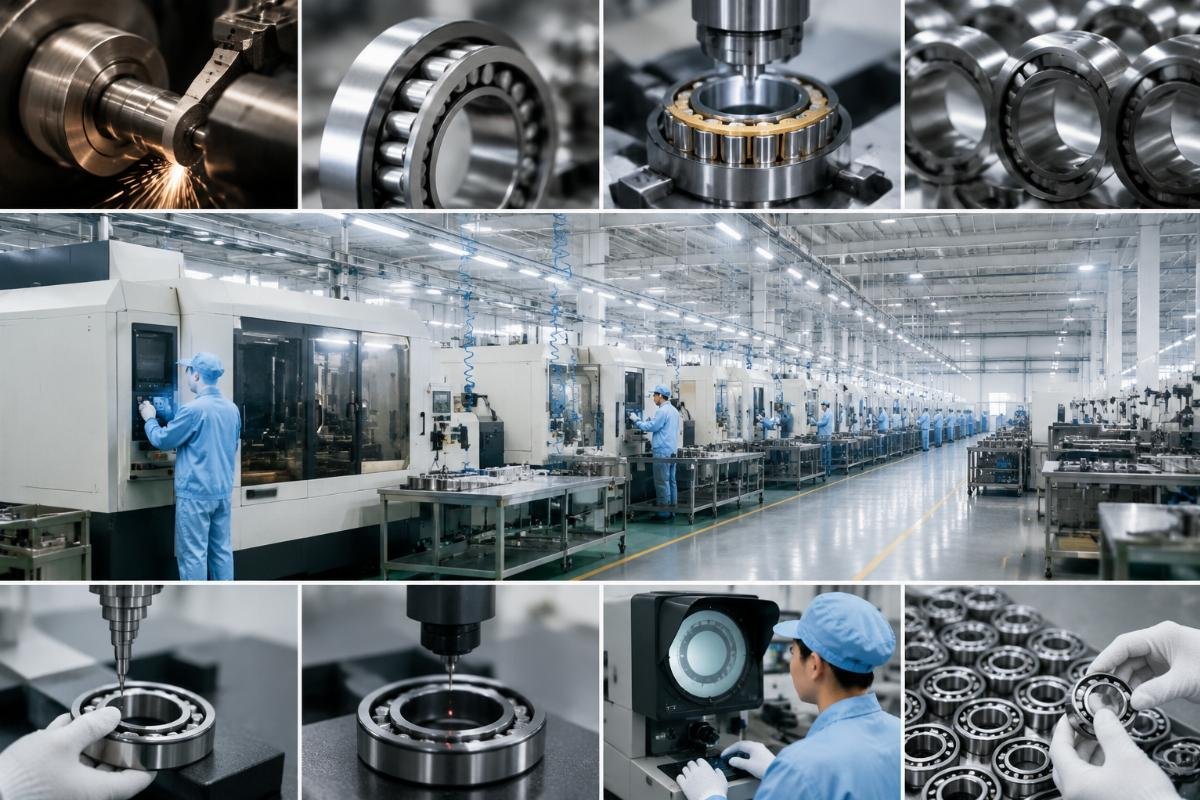
- Material Certification – Verify steel grade, heat treatment, and lubricant specifications match application requirements
- Dimensional Inspection – Confirm tolerance ranges meet ISO 492 standards for your precision grade needs
- Anti-Counterfeiting Measures – Look for laser marking, unique batch codes, and verifiable documentation packages
- Sealing Technology – Evaluate custom sealing options for your specific environmental conditions
- Testing Protocols – Request fatigue life testing data and performance guarantees for critical applications
What Criteria Should You Use to Select a China Bearing Supplier?
Supplier qualification requires rigorous evaluation beyond price comparisons. The right China bearing supplier should demonstrate not just cost advantages but also technical capabilities, quality control systems, and supply chain reliability that meet your operational requirements.
| Evaluation Category | Qualified Supplier Standards |
|---|---|
| Quality Management | ISO 9001/IATF 16949 certification with documented quality control processes |
| Traceability System | Full batch traceability from raw materials to finished product with accessible documentation |
| Technical Support | In-house engineering team providing bearing selection, load calculation, and failure analysis |
| Inventory Capacity | 10,000+ SKUs in stock with 72-hour standard delivery for common industrial bearing models |
| Logistics Network | Self-operated warehousing and global distribution capability with phased delivery options |
Our work with a mining and heavy industry procurement manager illustrates this approach. They required an annual contract for 500 units of 32220 tapered roller bearings with performance guarantees in harsh dust and moisture conditions. By providing stainless steel material options, maintaining a 12-week delivery cycle, and achieving a 98.5% first-pass inspection rate, we extended their bearing life by 25% compared to their previous generic supplier. Our failure analysis support helped identify improper lubrication as the root cause of their earlier performance issues, demonstrating the value of technical expertise alongside product supply.
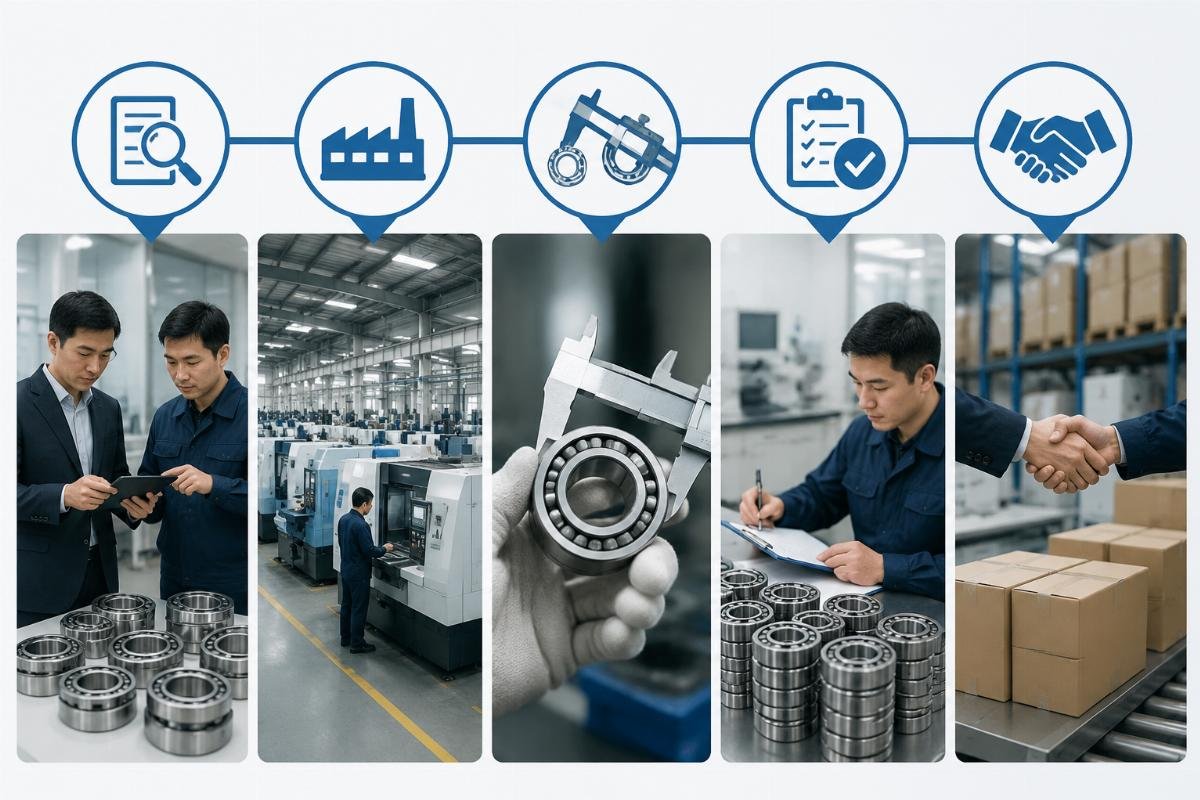
- Documentation Review – Validate certifications, quality control procedures, and traceability systems
- Factory Audit – Assess manufacturing capabilities, testing equipment, and process controls
- Sample Testing – Conduct dimensional verification and performance testing of prototype samples
- Batch Verification –

Leave a Reply