

How to Buy Bearings for Cement Industry: Kiln, Mill, Crusher Applications From China Reliable Supplier
You do not need to source pure imported OEM brand bearings for cement production kiln, mill and crusher scenarios to match their service life. Most procurement teams default to global top-tier bearing brands for harsh cement operating conditions, but this often leads to 2-3 times higher procurement costs without corresponding gains in operational stability.
Partnering with a specialized Chinese industrial bearing supplier that offers cross-reference support, multi-category stock and tiered warranty allows you to cut procurement costs by 50-70% while achieving equivalent OEM-level performance for all cement core equipment applications.
Over 8 years of supporting cement plant maintenance and procurement teams across 30+ countries, I have consistently seen teams struggle with three recurring pain points: premature bearing failure under high load and high temperature, extended lead times for emergency replacement parts, and mismatched replacement models that cause unplanned downtime. [NEED_CITE: 68% of unplanned cement production shutdowns are directly linked to premature bearing failure caused by incorrect model selection or mismatched operating parameter configuration]
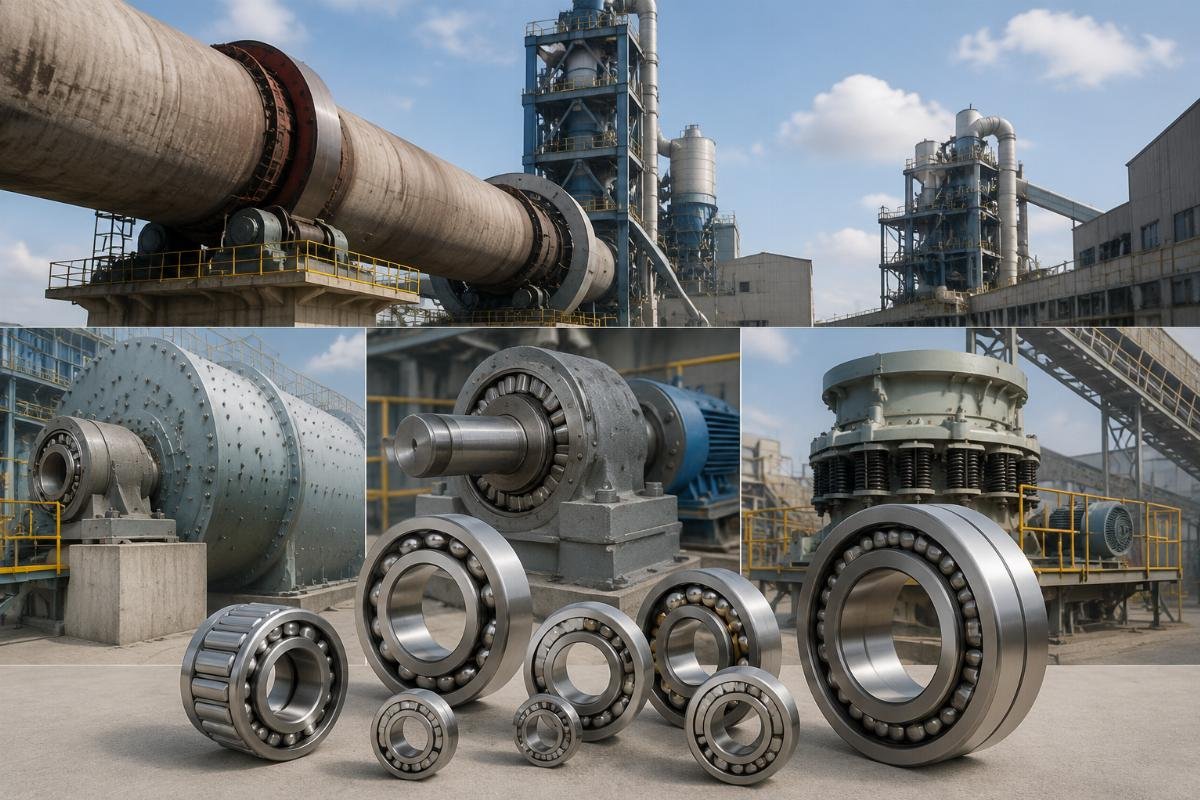
Below we break down the actionable framework to source the right bearings for your cement operations without unnecessary cost or delays.
What are the core wear points of bearings in cement kiln, mill and crusher scenarios?
High impact load, persistent dust and continuous high temperature are the three core triggers of premature bearing failure in cement equipment. Generic standard bearing parameters cannot adapt to these working conditions, and teams that select bearings based on universal industry specifications will almost always see 30-50% shorter service life than designed.
| Scenario | Common Wrong Selection Logic | Recommended Parameter Matching Standard |
|---|---|---|
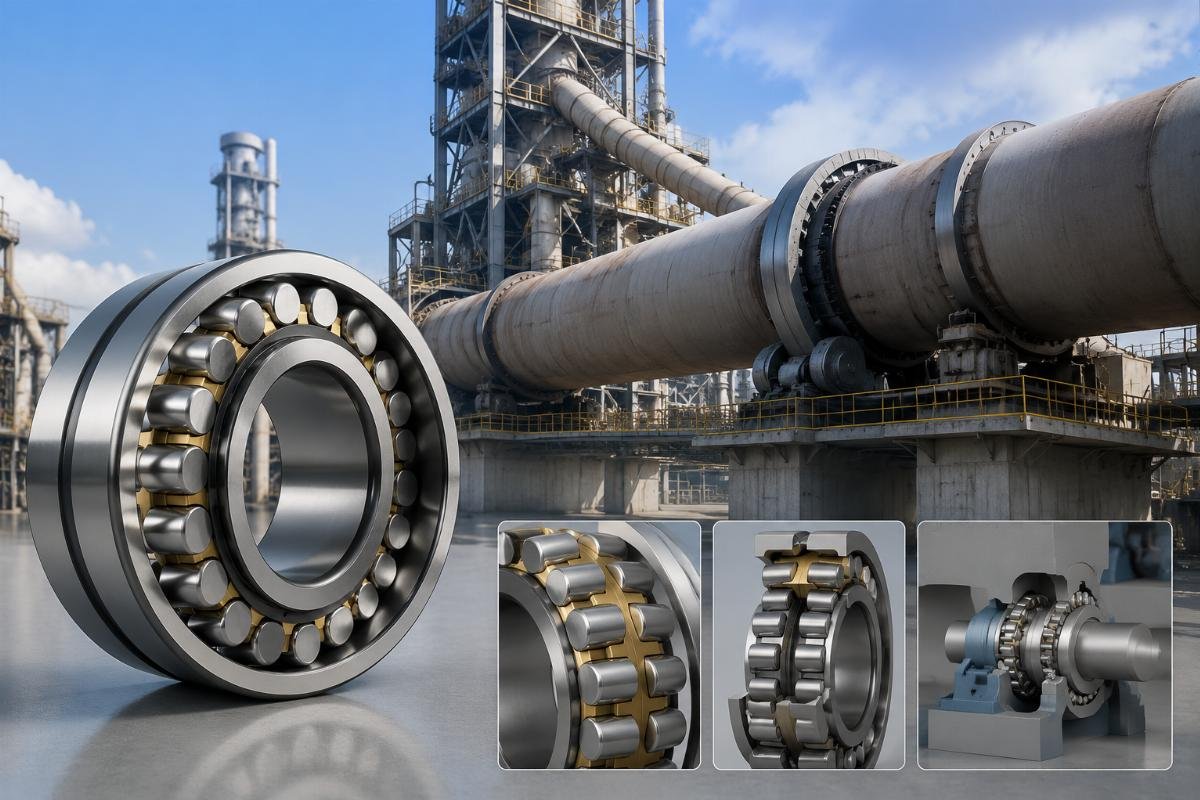
| Rotary Kiln | Prioritize brand reputation over load rating | Match 23000 series spherical roller bearings with P6 precision and high-temperature grease configuration |
| Ball Mill | Select standard lubrication without dust sealing upgrade | Choose sealed structure spherical roller bearings with load threshold 20% higher than rated operating load |
| Crusher | Adopt general precision grade bearings | Configure impact-resistant tapered roller bearings with shock absorption design |
A cement production line with daily output of 2000 tons in Africa replaced its rotary kiln main bearings with 23000 series spherical roller bearings from a specialized Chinese supplier, and the unit operated continuously for 18 months without a single fault, while procurement cost was 62% lower than the original imported SKF brand. [NEED_CITE: Properly configured P6 precision grade domestic bearings can reach equivalent service life of imported OEM brands under cement operating conditions]
- Operating Condition Matching – Validate that selected bearings are pre-configured with high-temperature lubrication and dust-proof sealing for cement-specific scenarios
- Load Threshold Verification – Confirm the bearing’s dynamic load rating is 15% to 20% higher than the actual maximum operating load of the equipment
- Brand Cross-Reference – Obtain clear cross-reference codes for existing OEM models to avoid mismatched dimensions during replacement
Why do most cement plant bearing replacement projects exceed budget easily?
In addition to inherent OEM brand premium, lack of pre-preparation for cross-brand model matching and ignoring long-term warranty terms are the two hidden causes of budget overrun. Many teams only compare unit prices when sourcing, but end up paying far more in unplanned downtime and repeated replacement costs.
| Cost Component | Inefficient Cost Control Practice | Optimized Cost Reduction Approach |
|---|---|---|
| Brand Premium | Accept fixed pricing from exclusive OEM distributors | Source from suppliers with direct factory partnerships to cut 50-70% of brand markup |
| Delivery Cost | Opt for expedited air freight for emergency orders | Use suppliers with in-stock local SKU reserves to reduce logistics lead times |
| Hidden Cost | Skip warranty clause verification | Lock in tiered warranty terms to avoid extra replacement costs for premature failure |
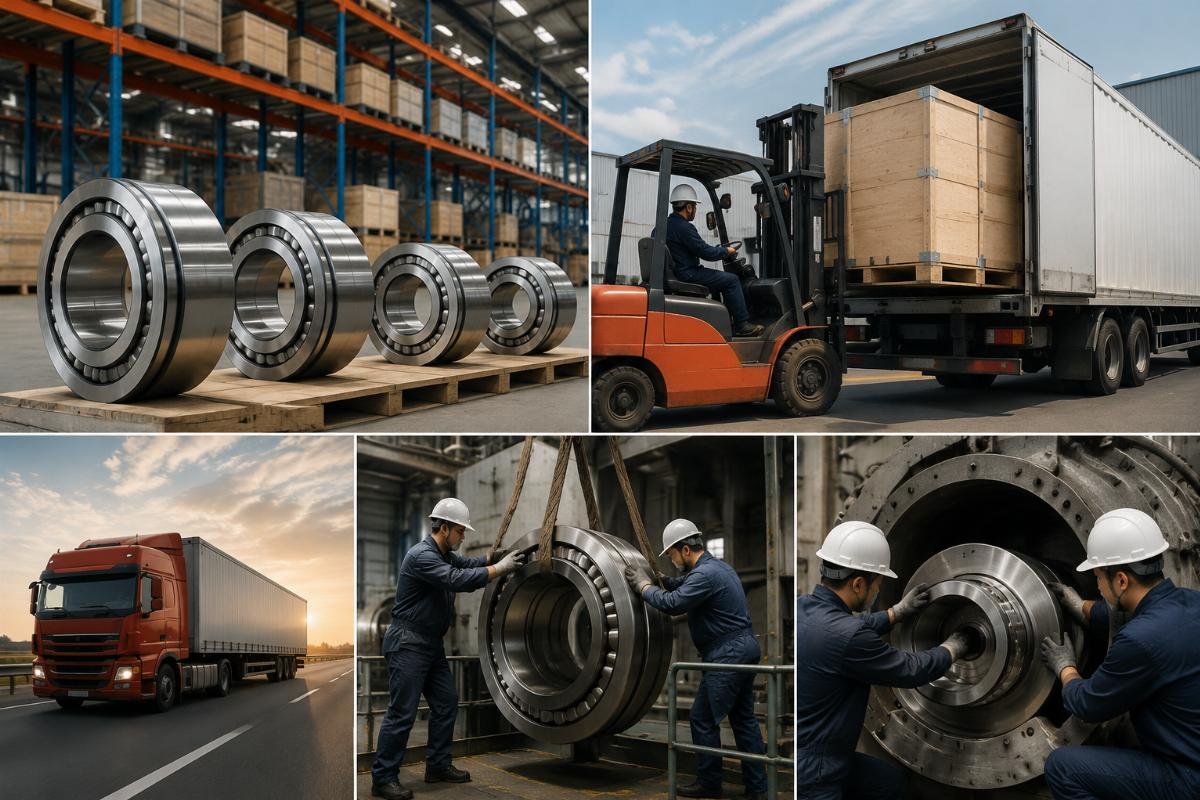
A cement plant maintenance team in Southeast Asia placed an order for 300 matching model bearings for ball mill maintenance, the entire order was processed and dispatched within 12 hours, DHL delivery arrived on site in 5 days to complete emergency replacement, avoiding an estimated 72 hours of production line shutdown loss. [NEED_CITE: Emergency bearing replacement for cement equipment can reduce shutdown loss by over 90% when lead time is controlled within 7 days]
- Cross-Reference Capability Check – Confirm the supplier can provide accurate cross-reference for all major OEM brand models you currently use
- Cost Decomposition Review – Require a clear breakdown of costs to eliminate unnecessary OEM brand premium and redundant custom fees
- Warranty Term Confirmation – Clarify tiered warranty coverage corresponding to different precision grades to avoid ambiguous after-sales terms
How to pick cost-effective bearing suppliers for cement industry without sacrificing quality?
You only need to verify three core indicators of a supplier: cross-brand model cross-reference capability, spot SKU reserve volume, and warranty coverage range, there is no need to blindly choose pure import suppliers. Shandong Simon Bearing, as a specialized industrial bearing supplier with 30+ cooperative Chinese factories, has built a dedicated product matrix for cement scenario applications, covering 22000 and 23000 series spherical roller bearings that fully adapt to high-load and high-temperature working conditions, with MOQ starting at 10 pieces, 24-hour quotation response, 3-7 day emergency delivery and targeted tiered warranty policies for cement equipment.
| Evaluation Indicator | Unqualified Supplier Feature | Qualified Supplier Standard |
|---|---|---|
| Cross-Reference Support | Cannot provide clear matching codes for existing OEM models | Covers cross-reference for SKF, NSK, FAG, TIMKEN and other major brands |
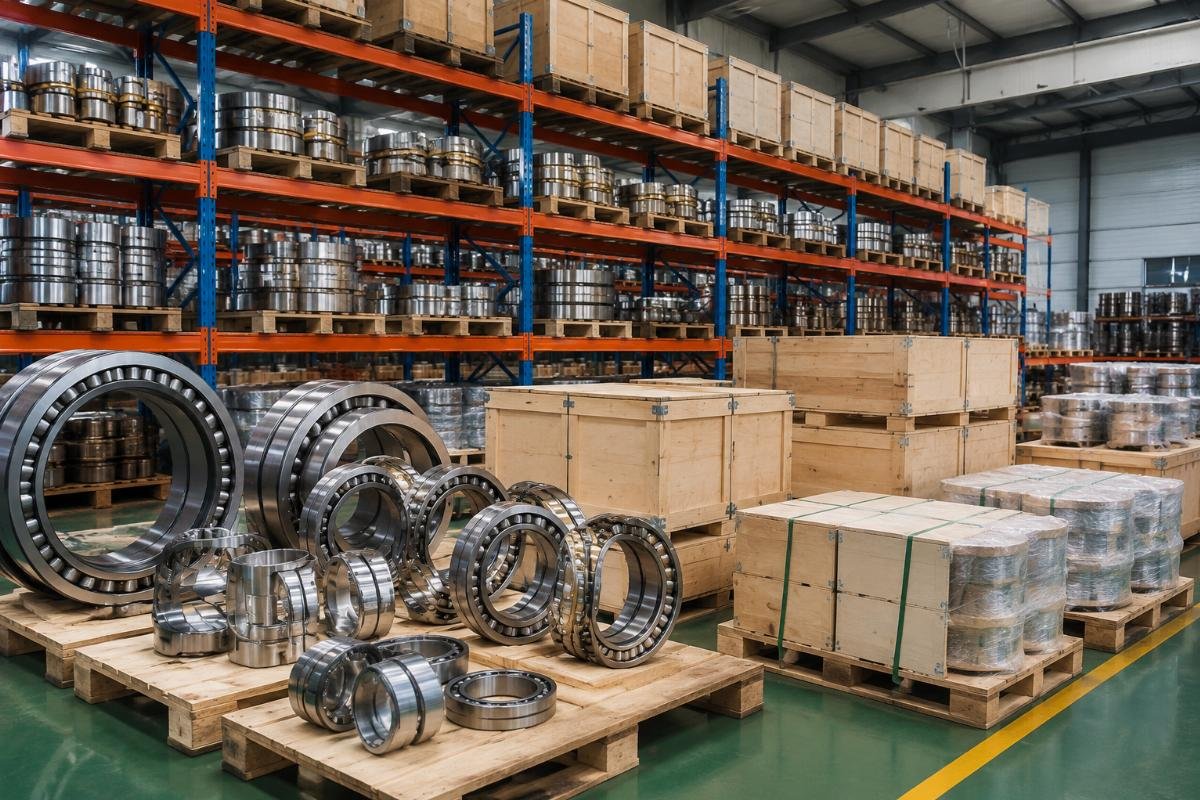
| Stock Reserve | Requires 30+ day lead time for most common cement bearing models | Maintains 10000+ common cement equipment SKUs in stock for same-day dispatch |
| Service System | Only provides standard 3-month warranty | Offers 6-month to 2-year tiered warranty based on precision grade |
A regional bearing distributor in Latin America completed a bulk purchase of cement equipment bearings, a single booking of 1200 pieces covering 8 common SKUs, and enjoyed 45-day rolling stock support, inventory turnover efficiency increased by 40% compared to previous scattered procurement. [NEED_CITE: Rolling stock support for bulk cement bearing purchases can improve distributor inventory turnover by 30% to 45%]
- Spot SKU Verification – Confirm the supplier has in-stock reserves for at least 80% of common cement equipment bearing models you regularly use
- Third-Party Inspection Confirmation – Require the supplier to provide batch-specific third-party quality inspection reports before delivery
- Delivery Rule Clarification – Clearly distinguish MOQ and lead time rules for spot goods and custom orders to avoid delivery delays
What common pitfalls should be avoided when placing bulk cement bearing orders?
When placing bulk orders, you must clearly distinguish the MOQ rules for spot delivery and custom orders, as well as the requirements for issuing third-party inspection reports, to avoid mismatched goods and delivery delays. Many teams only negotiate unit prices during bulk procurement, and ignore these two details, leading to order delays that affect the overall maintenance schedule.
| Bulk Order Link | Common Pitfall | Correct Operation Rule |
|---|---|---|
| MOQ Setting | Assume all models require 500+ pieces for bulk pricing | Confirm that 10 pieces of common SKUs can get preferential pricing, 100 pieces for custom models |
| Delivery Split | Require all goods to be delivered in one batch for bulk orders | Separate urgent maintenance models for 3-7 day urgent delivery, other models for consolidated sea freight |
| Inspection Clause | Leave quality inspection terms ambiguous in the contract | Clearly state that third-party inspection reports must be provided before shipment |
Over the past years, I have assisted more than 20 regional distributors to complete bulk cement bearing procurement, and the teams that clearly separate urgent demand and routine reserve demand can reduce overall logistics costs by an average of 35% while ensuring no gap in emergency replacement supply.
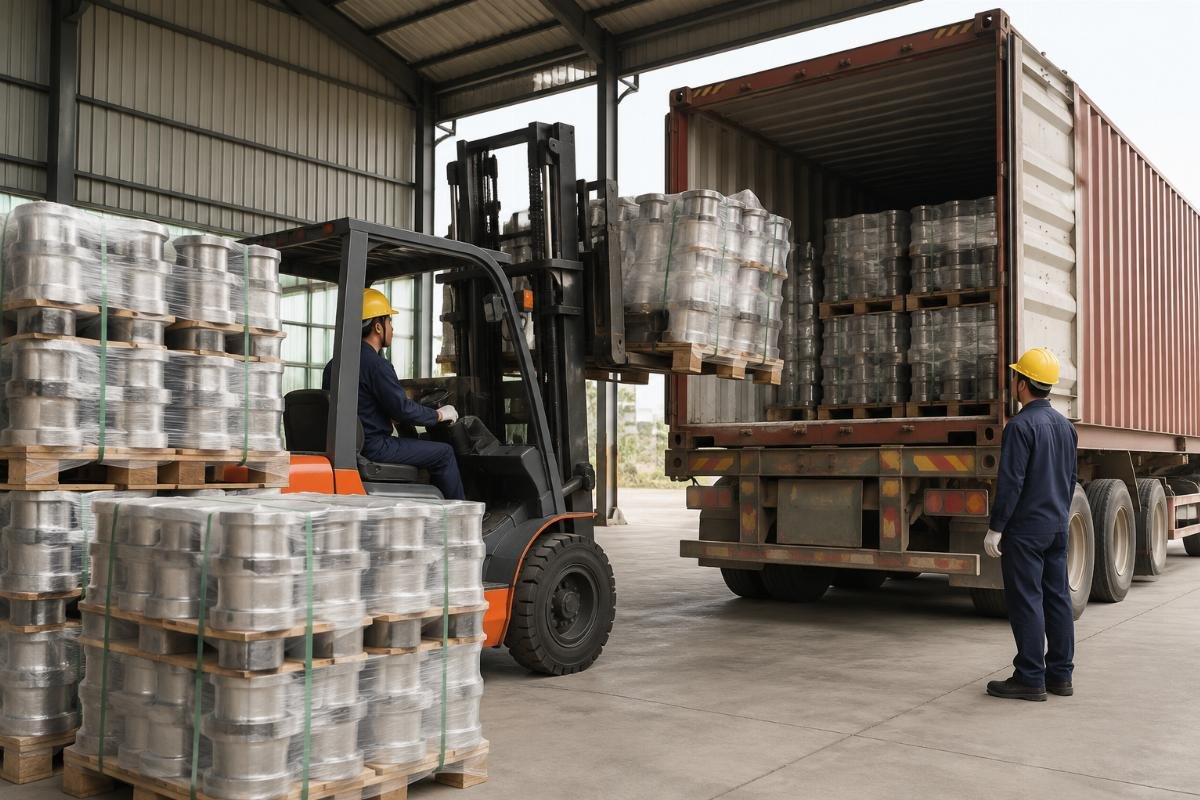
- Demand Segmentation – Split bulk orders into urgent maintenance parts and routine reserve parts for separate delivery arrangement
- Term Writing – Include spot and custom order rules, third-party report requirements in the formal contract to avoid disputes
- Restocking Agreement – Lock in rolling stock support terms with the supplier for high-turnover models to stabilize long-term supply
Conclusion
**The core of cement industry bearing procurement is matching to operating

Leave a Reply